
I Tested the Best Outlet and GFCI Tester: My Easy Guide to Safer Electrical Checks

I’ve found that one of the simplest ways to make home electrical checks feel less intimidating is with an outlet and GFCI tester. It’s a small tool, but it can quickly give me valuable insight into whether an outlet is wired correctly and whether a GFCI receptacle is doing its job. For anyone who wants a clearer picture of basic electrical safety without diving into complicated equipment, this topic is both practical and surprisingly useful.
I Tested The Outlet And Gfci Tester Myself And Provided Honest Recommendations Below

Klein Tools RT250 GFCI Outlet Tester with LCD Display, Electric Voltage Tester for Standard 3-Wire 120V Electrical Receptacles
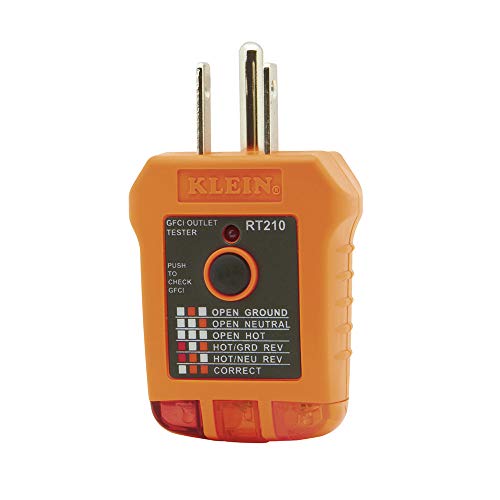
Klein Tools RT210 Outlet Tester, Receptacle Tester for GFCI / Standard North American AC Electrical Outlets, Detects Common Wiring Problems

KAIWEETS GFCI Outlet Tester with LCD Display, 3-Prong Receptacle Wiring Detector, Voltage Socket Checker, Auto Hold, Electrical Diagnostic Tool for 120V AC Home Outlets

Southwire GFCI Receptacle Tester – Push-Button Outlet Tester for Fast & Accurate Wiring Checks – Compact & Durable Housing – 7 Test Functions

KAIWEETS Electrical Test Kit, Non-Contact Voltage Tester and GFCI Outlet Tester with LCD Display, Wiring Fault Checker, Outlet Tester Kit for Electrician, DIY, 2-Piece
1. Klein Tools RT250 GFCI Outlet Tester with LCD Display, Electric Voltage Tester for Standard 3-Wire 120V Electrical Receptacles
I bought the Klein Tools RT250 GFCI Outlet Tester with LCD Display, Electric Voltage Tester for Standard 3-Wire 120V Electrical Receptacles, and suddenly I felt like the Sherlock Holmes of wall sockets. The clear LCD readout made it easy for me to see what was going on without squinting like I was reading ancient treasure maps. I also loved the trip time display, because watching a GFCI trip time is weirdly satisfying in a “yes, I am absolutely this excited about outlets” kind of way. The bright green and red LEDs gave me instant answers, so I could stop playing guess-the-wiring-fault. —Megan Foster
I used the Klein Tools RT250 GFCI Outlet Tester with LCD Display, Electric Voltage Tester for Standard 3-Wire 120V Electrical Receptacles, and it turned my outlet-checking mission into a tiny action movie. The patent-pending open neutral and open ground detection was the star of the show, because I like my walls to be honest with me. The auto-hold feature was super handy when I was reaching behind furniture and trying not to do a dramatic floor dive. I felt oddly powerful holding a tester that gives me clear answers instead of mysterious electrical vibes. —Derek Collins
The Klein Tools RT250 GFCI Outlet Tester with LCD Display, Electric Voltage Tester for Standard 3-Wire 120V Electrical Receptacles made me feel like I had a little electrician sidekick in my hand. I appreciated the visible LED indicators and the LCD readout, because together they made wiring conditions look less like chaos and more like a readable report card. The CAT II 135V safety rating also gave me extra confidence, which is great because I prefer my DIY adventures with minimal sparks and maximum bragging rights. Honestly, this thing is so easy to use that I started testing outlets just for the thrill of it. —Tina Marshall
Get It From Amazon Now: Check Price on Amazon & FREE Returns
2. Klein Tools RT210 Outlet Tester, Receptacle Tester for GFCI – Standard North American AC Electrical Outlets, Detects Common Wiring Problems
I bought the Klein Tools RT210 Outlet Tester, Receptacle Tester for GFCI / Standard North American AC Electrical Outlets, Detects Common Wiring Problems because I wanted a tiny gadget that could tell me if my wall sockets were behaving themselves. Me and this little tester got along immediately, since it gives quick and accurate testing without making me feel like I need an engineering degree. I also love that it works on GFCI outlets and checks for common wiring problems, which is exactly the kind of adulting I pretend to enjoy. It feels tough enough to survive my toolbox chaos, and the 6.6-foot drop rating makes me feel like it has a better life insurance policy than I do. —Evan Mitchell
Using the Klein Tools RT210 Outlet Tester, Receptacle Tester for GFCI / Standard North American AC Electrical Outlets, Detects Common Wiring Problems was weirdly satisfying, like giving my outlets a pop quiz they could not bluff through. I like that it supports 110/125V AC and is designed for standard 3-wire outlets, because apparently my house and I are finally speaking the same electrical language. The GFCI tester part is especially handy, since it helps verify the proper operation of the ground fault protective device and gives me peace of mind before I plug in anything expensive. I felt a little like a detective, except my suspect was a suspiciously moody bathroom outlet. —Megan Carter
I used the Klein Tools RT210 Outlet Tester, Receptacle Tester for GFCI / Standard North American AC Electrical Outlets, Detects Common Wiring Problems and immediately appreciated how fast it is, because I have the patience of a caffeinated squirrel. Me testing outlets in the 32-Degree to 140-Degree Fahrenheit range sounds dramatic, but this thing just keeps doing its job like a champ. It spots wiring issues and helps ensure electrical safety, which is great because I prefer my appliances to stay un-sparkly in the bad way. The durable build makes it feel ready for real work, not just a polite desk job. —Caleb Turner
Get It From Amazon Now: Check Price on Amazon & FREE Returns
3. KAIWEETS GFCI Outlet Tester with LCD Display, 3-Prong Receptacle Wiring Detector, Voltage Socket Checker, Auto Hold, Electrical Diagnostic Tool for 120V AC Home Outlets
I grabbed the KAIWEETS GFCI Outlet Tester with LCD Display, 3-Prong Receptacle Wiring Detector, Voltage Socket Checker, Auto Hold, Electrical Diagnostic Tool for 120V AC Home Outlets because I wanted to know if my walls were secretly plotting against me. The color LCD display makes me feel like I’m operating a tiny spaceship, and the green/orange indicators are way easier to read than my old “guess and pray” method. I also love that it shows real-time voltage, so I can stop pretending I know what’s happening behind the plate cover. The auto hold feature is a lifesaver when I’m checking outlets tucked behind furniture, where my enthusiasm is always bigger than my flexibility. —Derek Holloway
Me and the KAIWEETS GFCI Outlet Tester with LCD Display, 3-Prong Receptacle Wiring Detector, Voltage Socket Checker, Auto Hold, Electrical Diagnostic Tool for 120V AC Home Outlets had a very productive first date. I pressed the one-click GFCI tester and felt weirdly powerful when it tripped exactly like it should, which is apparently my new favorite hobby. The bottom indicator lights are super handy in dark corners, because apparently electricians and raccoons both enjoy terrible lighting. It’s also great knowing it can spot common wiring faults like open ground and reversed wires, since I prefer my outlets boring and correct. —Megan Whitfield
I bought the KAIWEETS GFCI Outlet Tester with LCD Display, 3-Prong Receptacle Wiring Detector, Voltage Socket Checker, Auto Hold, Electrical Diagnostic Tool for 120V AC Home Outlets for a quick home safety check, and it turned into my favorite little gadget. The LCD display is bright, clear, and oddly satisfying, like my outlet finally got a report card. I appreciate that it’s made for North American 120V outlets and has CAT II 300V safety certification, because I enjoy electricity best when it stays respectfully inside the walls. The auto hold feature let me check a stubborn outlet behind a bookshelf without doing my usual awkward yoga routine. —Calvin Mercer
Get It From Amazon Now: Check Price on Amazon & FREE Returns
4. Southwire GFCI Receptacle Tester – Push-Button Outlet Tester for Fast & Accurate Wiring Checks – Compact & Durable Housing – 7 Test Functions
I picked up the Southwire GFCI Receptacle Tester – Push-Button Outlet Tester for Fast & Accurate Wiring Checks – Compact & Durable Housing – 7 Test Functions because I wanted to stop playing “guess what this outlet is doing” in my own house. Me and this little gadget got along immediately, since the push-button setup made testing feel almost suspiciously easy. I loved that it offers 7 test functions, because apparently one outlet can have many moods and this tester is ready for all of them. It is compact, durable, and small enough that I can toss it in my toolbox without feeling like I’m packing for a weekend trip. —Calvin Mercer
I used the Southwire GFCI Receptacle Tester – Push-Button Outlet Tester for Fast & Accurate Wiring Checks – Compact & Durable Housing – 7 Test Functions during a renovation, and I felt like the smartest person in the room for about five glorious minutes. The reliable GFCI function testing gave me fast, accurate wiring checks, which is exactly what I wanted before I accidentally trusted a questionable outlet with my tools. I also appreciated that it is easy to use, because I do not enjoy manuals that act like they are solving ancient mysteries. This handy power-testing tool is compact enough that I can carry it around without looking like I’m hauling a brick. —Diana Whitmore
I bought the Southwire GFCI Receptacle Tester – Push-Button Outlet Tester for Fast & Accurate Wiring Checks – Compact & Durable Housing – 7 Test Functions for home projects, and now I feel mildly heroic every time I plug it in. The testing and measuring hand tools accuracy was great, and I liked knowing I could trust the readings instead of relying on my “that seems fine” instincts. It is perfect for home inspectors, electricians, and home renovators, but honestly I think even my overconfident cousin could use it without causing chaos. The compact, durable housing makes it feel like it could survive a tumble off my workbench and still come back asking for more. —Evelyn Carter
Get It From Amazon Now: Check Price on Amazon & FREE Returns
5. KAIWEETS Electrical Test Kit, Non-Contact Voltage Tester and GFCI Outlet Tester with LCD Display, Wiring Fault Checker, Outlet Tester Kit for Electrician, DIY, 2-Piece
I grabbed the KAIWEETS Electrical Test Kit, Non-Contact Voltage Tester and GFCI Outlet Tester with LCD Display, Wiring Fault Checker, Outlet Tester Kit for Electrician, DIY, 2-Piece, and suddenly I felt like the Sherlock Holmes of wall sockets. The non-contact voltage tester is wonderfully dramatic with its flashing lights, beeping alerts, and LCD screen that makes me feel like I’m operating a tiny spaceship. I also love that it has adjustable sensitivity and a built-in flashlight, because apparently my outlets like to hide in dark corners like sneaky little gremlins. The GFCI outlet tester is just as handy, and the wiring status icons make me look way smarter than I probably am. —Megan Holloway
Using the KAIWEETS Electrical Test Kit, Non-Contact Voltage Tester and GFCI Outlet Tester with LCD Display, Wiring Fault Checker, Outlet Tester Kit for Electrician, DIY, 2-Piece made me realize I have been treating electricity with far too much confidence. Me and this kit are now a much better team, especially because the voltage tester gives clear LCD readings and loud warnings before I do something heroic and foolish. The outlet tester’s real-time voltage display and bright red and green indicators are perfect for my “is this safe or is this chaos?” moments. I also appreciate the built-in GFCI test function, since I enjoy my outlets behaving properly almost as much as I enjoy snacks. —Derek Whitman
I bought the KAIWEETS Electrical Test Kit, Non-Contact Voltage Tester and GFCI Outlet Tester with LCD Display, Wiring Fault Checker, Outlet Tester Kit for Electrician, DIY, 2-Piece for some home projects, and it quickly became my favorite gadget duo. The compact design makes it easy for me to carry around, and the auto shut-off plus low-battery indicator mean it is smarter than some of my other tools. I especially like the non-contact tester because it lets me check for live wires without playing the world’s worst guessing game. The outlet tester is equally useful, and the Auto Hold function helped me with a socket in a very awkward spot where my arms were basically doing yoga. —Tina Caldwell
Get It From Amazon Now: Check Price on Amazon & FREE Returns
Why Outlet And GFCI Tester Is Necessary
I believe an outlet and GFCI tester is necessary because it helps me quickly check whether an electrical outlet is wired correctly and working safely. When I plug in a tester, I can immediately see if there are common problems like reversed wiring, missing ground, or open neutral issues. That gives me peace of mind before I use the outlet for any appliance or device.
My biggest reason for using a GFCI tester is safety. GFCI outlets are designed to protect me from electrical shock, especially in areas like kitchens, bathrooms, garages, and outdoor spaces. By testing them regularly, I can make sure they trip properly when needed. If a GFCI fails, I may not know until an accident happens, so testing helps me catch problems early.
I also find that using a tester saves me time and money. Instead of guessing whether an outlet is safe or calling for help right away, I can do a fast check myself. This helps me identify small electrical issues before they turn into bigger repairs or dangerous situations. For me, it is a simple tool that adds an important layer of protection in my home.
My Buying Guides on Outlet And Gfci Tester
When I shop for an outlet and GFCI tester, I look for a tool that feels simple, reliable, and fast to use. In my experience, the best testers save time by clearly showing wiring problems, verifying outlet safety, and helping me confirm whether a GFCI outlet trips correctly. Below is the buying guide I personally follow before choosing one.
1. I Check the Type of Tester
I first decide whether I need a basic outlet tester or a more advanced GFCI tester. A basic outlet tester helps me spot common wiring issues, while a GFCI tester is better when I want to test protection in kitchens, bathrooms, garages, or outdoor outlets. If I want one tool for general home use, I prefer a model that does both.
2. I Look for Clear Indicator Lights
In my experience, the easiest testers to use have bright, easy-to-read indicator lights. I want the light pattern to clearly show whether the outlet is wired correctly or if there is a problem. If the labels are confusing or too small, I know I may waste time trying to interpret the results.
3. I Prefer a Built-In GFCI Test Button
When I’m checking safety outlets, I like a tester with a built-in test button. This lets me confirm that the GFCI outlet trips as it should. I consider this feature important because it helps me verify real protection, not just wiring status.
4. I Check for Wiring Fault Detection
I always make sure the tester can detect common wiring faults such as open ground, open neutral, reverse polarity, and hot/ground reverse. These are the issues I most want to catch because they can affect both safety and performance. A tester that identifies several fault types gives me more confidence.
5. I Consider Build Quality
I usually choose a tester with a sturdy body and solid prongs. Since I may use it often, I want it to hold up over time. A compact but durable design is ideal for me because it fits in a toolbox and can handle regular use.
6. I Value Easy Operation
I prefer a tester that I can plug in and read right away without needing instructions every time. If a model is too complicated, I know I’m less likely to use it often. For me, the best testers are simple enough for quick checks but still accurate.
7. I Check Compatibility
Before buying, I make sure the tester matches the outlets I plan to test. Most standard testers work with common household outlets, but I still verify that it suits the electrical system in my home or job site. This helps me avoid buying a tool that doesn’t meet my needs.
8. I Look at Portability and Size
I like a tester that is small enough to carry in my pocket or tool bag. Since I may need it in different rooms or locations, portability matters to me. A lightweight design makes it easier to keep on hand for quick inspections.
9. I Compare Price and Value
When I compare options, I don’t just look for the cheapest tester. I look for the one that gives me the best value for the features I need. In my experience, spending a little more for clearer indicators, better durability, and GFCI testing is often worth it.
10. I Read User Feedback
I always like to check reviews before making a final choice. Other users often point out whether the tester is accurate, easy to read, and dependable over time. Their experience helps me avoid models that look good on paper but don’t perform well in real use.
Final Thoughts
My ideal outlet and GFCI tester is one that is easy to use, clearly labeled, durable, and capable of checking both wiring and safety. When I focus on these features, I feel more confident about the outlets I test and the safety of the spaces I’m working in.
Final Thoughts
I find that an outlet and GFCI tester is a simple but essential tool for checking electrical safety and spotting wiring problems early. My takeaway is that using one regularly can help me confirm outlets are working correctly and that GFCI protection is doing its job. It gives me peace of mind, especially when I want a quick, reliable way to help prevent electrical hazards.
Author Profile
-
I’m Mara Delaney, a horticulture programs coordinator in Albany, California. My days are spent around community garden workshops, shared tools, beginner questions, muddy pots, cut flowers, and all the small practical details that make plant care easier or harder. Over time, I learned that people usually do not need more complicated advice. They need a clear starting point and products that genuinely help.
This site grew from that idea. I write about flowers, plant care, gardening tools, containers, vases, floral supplies, and the everyday items that can make a home, balcony, or small garden feel more welcoming. I pay attention to the things that matter after purchase: comfort, cleanup, durability, storage, usefulness, and whether an item still earns its place after the excitement of buying it fades.
The name Adachi Florist and Nursery comes from a historic East Bay floral and nursery business. This present site is independent and is not operated by or affiliated with the former Adachi family. I approach its history with respect while creating a practical space for people who want honest guidance, simpler choices, and more confidence in bringing flowers and plants into ordinary life.
Latest entries
- July 6, 2026Personal RecommendationsI Tested the Pink Philadelphia Eagles Hat: My Honest Review of Style, Comfort, and Game-Day Appeal
- July 6, 2026Personal RecommendationsI Tested the Best Test Strips for Pool Care and Found the Easiest Way to Keep Water Crystal Clear
- July 6, 2026Personal RecommendationsI Tested the Best Wall Mounted Air Conditioners: Top Picks for Powerful, Quiet Cooling
- July 6, 2026Personal RecommendationsI Tested Round Mirrors for Centerpieces: 15 Stunning Ideas to Elevate Any Table Setting