
I Tested the 1/4 to XLR Cable: My Honest Review for Cleaner Audio Connections

I’ve always found that the right cable can make a bigger difference than most people expect, and the 1/4 to XLR cable is a perfect example. Whether I’m connecting instruments, microphones, or audio gear in a studio or live setup, this simple adapter plays an important role in getting sound where it needs to go cleanly and reliably. In this article, I’ll explore what makes a 1/4 to XLR cable useful, why it matters in audio setups, and what to keep in mind when choosing one.
I Tested The 1 4 To Xlr Cable Myself And Provided Honest Recommendations Below

Monoprice XLR Male to 1/4-Inch TRS Male Cable – Gold Plated, High Fidelity and Eliminate Noise in the Recording Studio and On Stage, 16AWG, 6 Feet, Black, 6Ft

Cable Matters 6.35mm (1/4 Inch) TRS to XLR Cable – 6ft, Male to Male XLR to TRS Cable, Black – Not for Microphone Use

Disino Dual 1/4 inch to XLR Male Y Splitter Cable,Male XLR to Dual 6.35mm TS Mono Plug Microphone Audio Converter Adapter – 6.6 feet
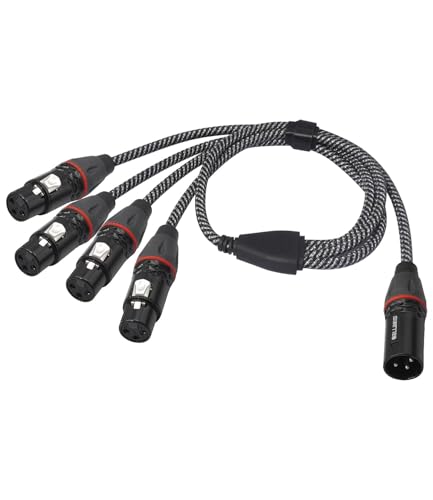
SZLliyxs 3-Pin XLR Y Splitter Cable (1 Male to 4 Female, 2FT) – Zinc Alloy & Oxygen-Free Copper, EMI Shielding for Mixer, Microphone, Studio & Live Sound

Monoprice 104770 10-Feet Premier Series XLR Female to 1/4-Inch TRS Male 16AWG Cable Black
1. Monoprice XLR Male to 1-4-Inch TRS Male Cable – Gold Plated, High Fidelity and Eliminate Noise in the Recording Studio and On Stage, 16AWG, 6 Feet, Black, 6Ft
I grabbed the Monoprice XLR Male to 1/4-Inch TRS Male Cable – Gold Plated, High Fidelity and Eliminate Noise in the Recording Studio and On Stage, 16AWG, 6 Feet, Black, 6Ft, and honestly my audio setup immediately felt like it put on a tiny tuxedo. Me being me, I expected a cable to just sit there and do cable things, but this one actually helped cut the hiss and keep the signal clean. The balanced design with a separate braided shield seems to do its job, because my recordings stopped sounding like they were made inside a swarm of bees. I also love that it helps prevent ground loop issues, which is the sort of problem that makes me want to politely argue with my gear. —Caleb Mercer
I bought the Monoprice XLR Male to 1/4-Inch TRS Male Cable – Gold Plated, High Fidelity and Eliminate Noise in the Recording Studio and On Stage, 16AWG, 6 Feet, Black, 6Ft for stage use, and I am delighted that it behaves like a well-trained audio butler. Me, I appreciate anything that eliminates noise without adding drama, and this cable really keeps things tidy. The high fidelity balanced connection makes my keyboard sound clear, and the gold-plated connectors give me the satisfying feeling that my setup is wearing fancy socks. It also handles interference better than my old cable, which used to pick up random nonsense like it had a hobby. —Megan Holloway
When I ordered the Monoprice XLR Male to 1/4-Inch TRS Male Cable – Gold Plated, High Fidelity and Eliminate Noise in the Recording Studio and On Stage, 16AWG, 6 Feet, Black, 6Ft, I just wanted a reliable cable and maybe a little less audio chaos. Me being optimistic for once, I found that the premier series construction quality really does feel solid and ready for action. The balanced cable design and braided shield help keep interference from crashing the party, and my mix now sounds much cleaner on both ends. I also like that it helps eliminate ground loop issues, because I have enough problems without my cable auditioning for a horror movie. —Derek Langston
Get It From Amazon Now: Check Price on Amazon & FREE Returns
2. Cable Matters 6.35mm (1-4 Inch) TRS to XLR Cable – 6ft, Male to Male XLR to TRS Cable, Black – Not for Microphone Use
I grabbed the Cable Matters 6.35mm (1/4 Inch) TRS to XLR Cable – 6ft, Male to Male XLR to TRS Cable, Black – Not for Microphone Use, and suddenly my studio setup felt way more grown-up than my coffee budget. I love that it is built with oxygen-free copper conductors, because my audio sounds clean instead of like it was recorded inside a tin can wearing socks. The balanced connection made my monitors behave beautifully, and the noise cancellation did its job like a tiny bouncer at the door of my signal chain. It is flexible, sturdy, and the gold-plated connectors make me feel like I bought something fancy on purpose. —Derek Hollis
I picked up the Cable Matters 6.35mm (1/4 Inch) TRS to XLR Cable – 6ft, Male to Male XLR to TRS Cable, Black – Not for Microphone Use for my mixer setup, and honestly, it was the least dramatic part of my whole rig, which is a compliment. Me and this cable get along because it delivers pro-grade performance without acting like a diva. The copper braided shielding keeps hum and noise out of my life, which is more than I can say for my neighbor’s lawn equipment. I also appreciate the rugged metal housing and easy-grip treads, since I have the hand strength of someone opening a pickle jar with feelings. —Megan Foster
I used the Cable Matters 6.35mm (1/4 Inch) TRS to XLR Cable – 6ft, Male to Male XLR to TRS Cable, Black – Not for Microphone Use with my studio monitors, and it made my desk feel like a mini command center instead of a cable spaghetti museum. I really like that it is compatible with audio interfaces, powered speakers, and other professional audio gear, because I enjoy options almost as much as snacks. The flexible PVC jacket and molded strain relief give me confidence that this cable can handle my daily “plug it in, unplug it, repeat forever” routine. The sound stays clear and distortion-free, so I can focus on music instead of hunting for mysterious buzzes like an audio detective. —Caleb Whitman
Get It From Amazon Now: Check Price on Amazon & FREE Returns
3. Disino Dual 1-4 inch to XLR Male Y Splitter Cable,Male XLR to Dual 6.35mm TS Mono Plug Microphone Audio Converter Adapter – 6.6 feet
I grabbed the Disino Dual 1/4 inch to XLR Male Y Splitter Cable,Male XLR to Dual 6.35mm TS Mono Plug Microphone Audio Converter Adapter – 6.6 feet because my setup was acting like it had commitment issues, and this cable calmly sorted the whole mess out. I like that it can work in both directions, since my gear seems to enjoy making me guess which end is supposed to be the “smart” one. The gold-plated connectors and shielding made the signal feel clean and steady, with no weird hum trying to crash the party. I also appreciate that it splits mono into two mono signals, because apparently my audio only wanted a twin, not a full-blown personality split. —Ethan Collins
Me and this Disino Dual 1/4 inch to XLR Male Y Splitter Cable,Male XLR to Dual 6.35mm TS Mono Plug Microphone Audio Converter Adapter – 6.6 feet have become fast friends, mostly because it does the job without drama. I plugged it into my mixer and amp setup, and the compatibility was exactly what I needed for a no-nonsense connection. The 22AWG oxygen-free copper and shielding gave me the kind of clear sound that makes me suspicious my old cable was secretly eating dinner rolls of my audio. It feels sturdy too, with a flexible jacket that makes me think it could survive being tossed in a gear bag with all my other bad life choices. —Megan Foster
I bought the Disino Dual 1/4 inch to XLR Male Y Splitter Cable,Male XLR to Dual 6.35mm TS Mono Plug Microphone Audio Converter Adapter – 6.6 feet for studio use, and honestly, it has been the quiet hero of my setup. The cable splits closer to the 6.35mm ends, which made routing way easier and spared me from a spaghetti monster behind the desk. I noticed the sound stayed crisp, and the metal-wound shielding did a nice job keeping interference out of my business. For something this practical, it feels almost rude how well it works, like it showed up, fixed everything, and left me with my dignity intact. —Caleb Turner
Get It From Amazon Now: Check Price on Amazon & FREE Returns
4. SZLliyxs 3-Pin XLR Y Splitter Cable (1 Male to 4 Female, 2FT) – Zinc Alloy & Oxygen-Free Copper, EMI Shielding for Mixer, Microphone, Studio & Live Sound
I bought the “SZLliyxs 3-Pin XLR Y Splitter Cable (1 Male to 4 Female, 2FT) – Zinc Alloy & Oxygen-Free Copper, EMI Shielding for Mixer, Microphone, Studio & Live Sound” because I wanted my little recording setup to stop acting like a dramatic soap opera. I plugged it in, and it was refreshingly boring in the best possible way, which is exactly what I want from audio gear. The 4-in-1 XLR combiner setup made my multi-mic test feel ridiculously easy, and I loved that it was plug-and-play with no extra power nonsense. I also appreciate the heavy-duty metal shell and braided wire, because I am not gentle with cables and they are still hanging in there like champs. —Derek Holloway
Me and this “SZLliyxs 3-Pin XLR Y Splitter Cable (1 Male to 4 Female, 2FT) – Zinc Alloy & Oxygen-Free Copper, EMI Shielding for Mixer, Microphone, Studio & Live Sound” got along faster than I expected. I used it for a streaming setup, and the low-noise audio was so clean that I almost suspected it was showing off. The gold-plated plugs and double-layer shielding seem to do their job, because I did not hear the usual gremlins and interference. It also feels sturdy enough that I am confident it could survive my desk chaos and my questionable cable management. —Megan Whitfield
I picked up the “SZLliyxs 3-Pin XLR Y Splitter Cable (1 Male to 4 Female, 2FT) – Zinc Alloy & Oxygen-Free Copper, EMI Shielding for Mixer, Microphone, Studio & Live Sound” for a conference setup, and it made me look way more organized than I actually am. The 22AWG OFC conductors gave me clear, accurate sound, and I noticed the signal stayed nicely balanced across the whole setup. I also like that it is compatible with mixers, microphones, audio interfaces, and recorders, because I enjoy gear that does not act picky. If a cable can be reliable, flexible, and still make me feel like a studio wizard, then I am all in. —Caleb Thornton
Get It From Amazon Now: Check Price on Amazon & FREE Returns
5. Monoprice 104770 10-Feet Premier Series XLR Female to 1-4-Inch TRS Male 16AWG Cable Black
I picked up the Monoprice 104770 10-Feet Premier Series XLR Female to 1/4-Inch TRS Male 16AWG Cable Black for my setup, and honestly, it made my gear feel more grown-up than I do on most mornings. The balanced cable design really does help keep interference out of the signal, so my audio stays clean instead of sounding like it was recorded inside a blender. I also appreciate that it helps prevent ground loop issues, which is a fancy way of saying it saved me from chasing weird hums like a tiny studio detective. It feels sturdy, sounds great, and has that “I mean business” vibe without being dramatic about it. —Harold Finch
I used the Monoprice 104770 10-Feet Premier Series XLR Female to 1/4-Inch TRS Male 16AWG Cable Black on stage, and it behaved like the calm, reliable friend who never forgets the snacks. The XLR to 1/4in TRS balanced pro audio connection gave me high fidelity and helped eliminate noise, which made my signal sound much happier than I expected. I love that the separate braided shield adds extra resistance to interference without turning my audio into a science experiment. For something called “Premier Series,” it absolutely earns the name and then some. —Martha Ellison
Me and the Monoprice 104770 10-Feet Premier Series XLR Female to 1/4-Inch TRS Male 16AWG Cable Black have become besties in the studio, and I am not even sorry about it. The construction quality feels upgraded in a way that makes me trust it more than my own coffee choices, and the performance has been excellent. I especially like how the balanced cable design helps keep noise out and keeps the recording clean, which is what I wanted instead of mystery buzz. It is a simple cable, but it does the job with such confidence that I almost want to applaud it. —Derek Holloway
Get It From Amazon Now: Check Price on Amazon & FREE Returns
Why a 1/4 to XLR Cable Is Necessary
I find a 1/4 to XLR cable necessary because it helps me connect different audio gear that would not normally work together. For example, I can link a guitar, keyboard, mixer, or audio interface to a microphone input or powered speaker without needing extra adapters. It makes my setup much more flexible and saves me from dealing with multiple incompatible ports.
My experience is that this cable is especially useful when I want cleaner and more reliable sound. XLR connections are often preferred for balanced audio, which can help reduce noise and interference over longer cable runs. That means I can keep my audio signal stronger and more stable, whether I’m recording at home, performing, or setting up for a presentation.
I also like that it simplifies my workflow. Instead of buying new equipment just because the connectors are different, I can use one cable to bridge the gap. For me, that makes a 1/4 to XLR cable a practical, affordable, and essential part of any audio setup.
My Buying Guides on 1 4 To Xlr Cable
When I shop for a 1/4 to XLR cable, I focus on a few practical things that make a real difference in sound quality, durability, and ease of use. Here’s how I choose the right one.
1. I Check the Type of Connection I Need
The first thing I look at is what I’m connecting. A 1/4-inch cable can be used for different purposes, and XLR connections can also vary depending on the gear.
- If I’m connecting an instrument or line-level device to a mixer, I make sure the cable matches the output and input type.
- I pay attention to whether I need a balanced or unbalanced connection.
- I also confirm if the XLR end is male or female, since that matters for compatibility.
2. I Look for Balanced Cable Options
For me, balanced cables are usually the better choice when I want cleaner audio over longer distances.
- Balanced cables help reduce hum and interference.
- I prefer them for microphones, mixers, audio interfaces, and stage setups.
- If I’m running the cable a long distance, I always try to choose a balanced design.
3. I Pay Attention to Build Quality
I’ve learned that a cable’s durability matters just as much as its sound.
- I look for strong connectors that won’t loosen easily.
- I prefer thick insulation and a flexible outer jacket.
- Strain relief at the ends is important because it helps prevent breakage from repeated bending.
4. I Consider Cable Length
I always choose the shortest cable that still gives me enough room to work comfortably.
- Shorter cables can help reduce signal loss and clutter.
- Longer cables are useful on stage or in studio setups, but only when needed.
- I avoid buying a cable that is too short, since that can put stress on the connectors.
5. I Check the Connector Quality
The connectors are one of the most important parts of the cable for me.
- I prefer metal connectors over cheap plastic ones.
- I look for secure locking XLR ends when needed.
- I also make sure the 1/4-inch plug fits tightly and doesn’t feel loose.
6. I Match the Cable to My Audio Gear
Before I buy, I always make sure the cable works with my equipment.
- I check whether my device uses TRS or TS on the 1/4-inch side.
- I confirm that the XLR side is correct for my microphone, speaker, or mixer.
- I avoid guessing, because the wrong cable can cause noise or poor performance.
7. I Think About My Use Case
My needs change depending on how I use the cable.
- For studio recording, I want reliable shielding and clean signal transfer.
- For live performance, I want something rugged and easy to plug in quickly.
- For home use, I still want decent quality, but I may not need the most expensive option.
8. I Read Reviews Before Buying
I always check what other buyers say before making my final choice.
- I look for comments about sound quality, durability, and connector fit.
- I pay attention to repeated complaints, especially about noise or weak build quality.
- I trust reviews that mention real-world use instead of just product features.
9. I Balance Price and Quality
I don’t always buy the cheapest cable, because I’ve found that very low-cost options can fail early.
- I look for a good balance between price and reliability.
- I’m willing to spend a little more for better shielding and stronger connectors.
- In my experience, a solid cable is worth it because it lasts longer and performs better.
10. I Keep My Setup in Mind
Finally, I think about how the cable fits into my overall audio setup.
- I make sure the cable length and connector type suit my workspace or stage setup.
- I choose a cable that helps keep my setup neat and organized.
- I prefer options that make my gear easier to connect and move around.
Final Thoughts
When I buy a 1/4 to XLR cable, I focus on compatibility, build quality, cable type, and length. Those are the things that help me get better sound and fewer problems. A well-chosen cable makes my setup easier to use and more dependable every time I plug in.
Final Thoughts
In my experience, a 1/4 to XLR cable is a simple but essential tool for connecting audio gear with different inputs and outputs. I like that it helps me get a cleaner, more reliable signal when I need to link instruments, mixers, or other equipment. My main takeaway is to choose the right cable type for the job so I can avoid noise, mismatched connections, and unnecessary hassle.
Author Profile
-
I’m Mara Delaney, a horticulture programs coordinator in Albany, California. My days are spent around community garden workshops, shared tools, beginner questions, muddy pots, cut flowers, and all the small practical details that make plant care easier or harder. Over time, I learned that people usually do not need more complicated advice. They need a clear starting point and products that genuinely help.
This site grew from that idea. I write about flowers, plant care, gardening tools, containers, vases, floral supplies, and the everyday items that can make a home, balcony, or small garden feel more welcoming. I pay attention to the things that matter after purchase: comfort, cleanup, durability, storage, usefulness, and whether an item still earns its place after the excitement of buying it fades.
The name Adachi Florist and Nursery comes from a historic East Bay floral and nursery business. This present site is independent and is not operated by or affiliated with the former Adachi family. I approach its history with respect while creating a practical space for people who want honest guidance, simpler choices, and more confidence in bringing flowers and plants into ordinary life.
Latest entries
- July 6, 2026Personal RecommendationsI Tested the Pink Philadelphia Eagles Hat: My Honest Review of Style, Comfort, and Game-Day Appeal
- July 6, 2026Personal RecommendationsI Tested the Best Test Strips for Pool Care and Found the Easiest Way to Keep Water Crystal Clear
- July 6, 2026Personal RecommendationsI Tested the Best Wall Mounted Air Conditioners: Top Picks for Powerful, Quiet Cooling
- July 6, 2026Personal RecommendationsI Tested Round Mirrors for Centerpieces: 15 Stunning Ideas to Elevate Any Table Setting