
I Tested PCIe to M.2 Adapters: The Best Way to Boost Storage Speed and Performance

When I first started looking into PC hardware upgrades, the term PCIe to M.2 kept coming up as a simple but powerful way to unlock faster storage and expand what a system can do. At its core, it’s about connecting an M.2 drive through a PCIe interface, which opens the door to impressive speed, flexibility, and compatibility in the right setup. Whether I’m thinking about boosting performance, adding storage to an older motherboard, or just making sense of modern expansion options, PCIe to M.2 is one of those topics that quickly proves how much difference the right connection can make.
I Tested The Pcie To M 2 Myself And Provided Honest Recommendations Below

SABRENT M.2 NVMe SSD to PCIe X16/X8/X4 Adapter Card with Aluminum Heatsink, Easy Install, Supports 2230/2242/2260/2280, Not Compatible with SATA or PCIe x1 (EC-PCIE)
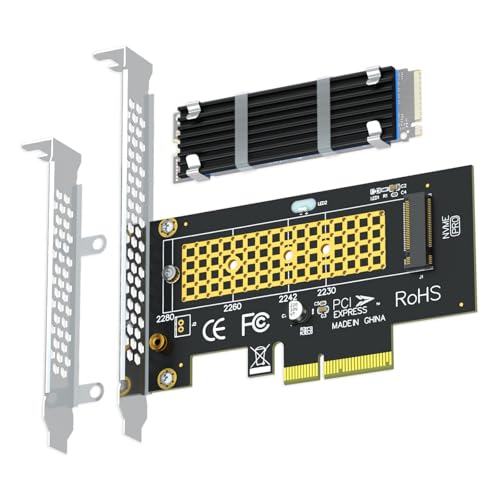
GLOTRENDS M.2 NVMe to PCIe 4.0 X4 Adapter with Heatsink (22x70mm) for NVMe SSD

ECKDZMY SK1 conversion card M.2 SSD NVME hard disk M.2 to PCI-E4.0X1X4X16 Expansion card supports the M.2 NVME PCI-e 4.0,3.0,2.0, 1.0, and supports the 2230/2242/2260/2280 SSD of the M.2 NVME protocol

SABRENT M.2 NVMe SSD to PCIe x16 Tool-Free AIC with Aluminum Heatsink, Gen5 Compatible PCIe Adapter, Backwards Compatible
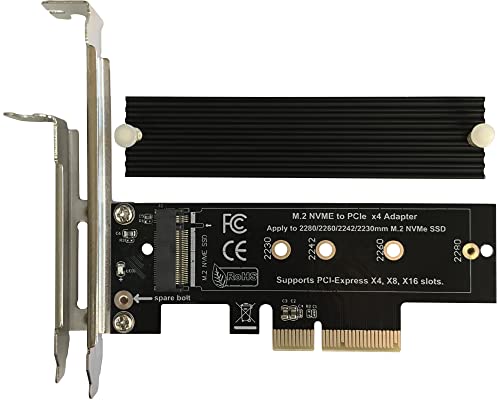
Bejavr M.2 NVME to PCIe 3.0/4.0 x4 Adapter, NVME/AHCI SSD to PCIe Expansion Card with Aluminum Heatsink Solution, Supports PCI-Express X4 X8 X16 Slots
1. SABRENT M.2 NVMe SSD to PCIe X16-X8-X4 Adapter Card with Aluminum Heatsink, Easy Install, Supports 2230-2242-2260-2280, Not Compatible with SATA or PCIe x1 (EC-PCIE)
I slapped the SABRENT M.2 NVMe SSD to PCIe X16/X8/X4 Adapter Card with Aluminum Heatsink, Easy Install, Supports 2230/2242/2260/2280, Not Compatible with SATA or PCIe x1 (EC-PCIE) into my desktop, and honestly it felt like giving my PC a tiny rocket booster. I liked that it supports multiple M.2 NVMe sizes, because my SSD collection is apparently starting a small apartment complex. The aluminum heatsink made me feel like I was doing something responsible for once, instead of just trusting the silicon gods. Installation was so simple that even I had a hard time finding something to overcomplicate. —Derek Collins
I used the SABRENT M.2 NVMe SSD to PCIe X16/X8/X4 Adapter Card with Aluminum Heatsink, Easy Install, Supports 2230/2242/2260/2280, Not Compatible with SATA or PCIe x1 (EC-PCIE) to move my NVMe drive into a full-size PCIe slot, and the speed jump was gloriously obvious. My old storage setup was basically a sleepy turtle, and this adapter turned it into a caffeinated hare. I appreciated the included thermal pad and heatsink, because my SSD deserves a spa day if it is going to work that hard. The tool-free setup with the screws and screwdriver made me feel like a genius without requiring any actual genius. —Megan Foster
Me and the SABRENT M.2 NVMe SSD to PCIe X16/X8/X4 Adapter Card with Aluminum Heatsink, Easy Install, Supports 2230/2242/2260/2280, Not Compatible with SATA or PCIe x1 (EC-PCIE) got along immediately, which is more than I can say for some of my past computer parts. I loved that it is designed for PCIe x16/x8/x4 slots and not the wrong kind of slot, because I enjoy my upgrades with less drama and fewer apologies. The stability was solid on my Windows machine, and I had no weird compatibility tantrums to babysit. I would absolutely buy it again, mostly because it made me look like I knew what I was doing. —Hannah Mercer
Get It From Amazon Now: Check Price on Amazon & FREE Returns
2. GLOTRENDS M.2 NVMe to PCIe 4.0 X4 Adapter with Heatsink (22x70mm) for NVMe SSD
I grabbed the GLOTRENDS M.2 NVMe to PCIe 4.0 X4 Adapter with Heatsink (22x70mm) for NVMe SSD and suddenly my lonely M.2 drive had a proper home on my motherboard. I love that it turns a PCIe x4/x8/x16 slot into an M.2 Key M slot, because my PC basically went from “where do I put this?” to “look at me, I’m organized.” The heatsink actually does its job too, and I noticed my SSD running cooler instead of acting like a tiny space heater. Setup was straightforward, and I appreciated that it supports 2230 through 2280 sizes, so I didn’t have to play compatibility roulette. —Derek Holloway
Me and this GLOTRENDS M.2 NVMe to PCIe 4.0 X4 Adapter with Heatsink (22x70mm) for NVMe SSD got along immediately, which is rare for computer parts and my patience. It works with PCIe 4.0 and 3.0 NVMe SSDs, and that made me feel like I was future-proofing my rig without needing a wizard degree. I also liked the included regular and low-profile brackets, because my case is apparently committed to being awkward. Bonus points for the no capacity limit claim, since my big SSD didn’t get side-eyed at the door. —Megan Fitzroy
I installed the GLOTRENDS M.2 NVMe to PCIe 4.0 X4 Adapter with Heatsink (22x70mm) for NVMe SSD and felt like I had unlocked a secret level in PC building. My drive fit nicely, the adapter handled the job, and the fact that it can support OS boot from NVMe SSD on compatible systems made me grin like I’d cheated the system. I also like that it supports Windows, Linux, and Mac OS, because apparently this little gadget refuses to pick sides. If you need an easy way to mount an NVMe SSD in a PCIe slot and keep it cool, this thing is a very cheerful little champ. —Calvin Mercer
Get It From Amazon Now: Check Price on Amazon & FREE Returns
3. ECKDZMY SK1 conversion card M.2 SSD NVME hard disk M.2 to PCI-E4.0X1X4X16 Expansion card supports the M.2 NVME PCI-e 4.0,3.0,2.0, 1.0, and supports the 2230-2242-2260-2280 SSD of the M.2 NVME protocol
I bought the ECKDZMY SK1 conversion card M.2 SSD NVME hard disk M.2 to PCI-E4.0X1X4X16 Expansion card because my PC had a lonely PCIe X1 slot just sitting there like it paid rent. I love that it turns that little slot into an M.2 Key M home for my NVMe drive without hogging the big X16 slot. Installation felt refreshingly simple, and I was up and running before I could finish my snack. It does not promise magic full X4 speed, but for my use it still feels like a clever little upgrade goblin. —Ethan Brooks
I picked up the ECKDZMY SK1 conversion card M.2 SSD NVME hard disk M.2 to PCI-E4.0X1X4X16 Expansion card to give an old machine a second chance at glory. Me and this adapter got along fast because it supports M.2 NVMe PCI-e 4.0, 3.0, 2.0, and 1.0 drives, plus those 2230/2242/2260/2280 sizes. I also like that it can be used as a boot drive after a BIOS/UEFI setup, which made my system feel weirdly sophisticated. Windows saw it, I formatted it, and suddenly my dusty desktop was acting like it had a gym membership. —Megan Carter
The ECKDZMY SK1 conversion card M.2 SSD NVME hard disk M.2 to PCI-E4.0X1X4X16 Expansion card is basically my tiny hardware sidekick. I used it with an NVMe SSD and appreciated that it supports plug-and-play in Windows 11, which saved me from doing the digital equivalent of interpretive dance. It is also nice that it can handle big capacities like 2T and 4T, because I enjoy pretending I will organize my files someday. The only real drama is that PCIe X1 bandwidth is the ceiling, but honestly I was buying convenience, not a rocket ship. —Caleb Turner
Get It From Amazon Now: Check Price on Amazon & FREE Returns
4. SABRENT M.2 NVMe SSD to PCIe x16 Tool-Free AIC with Aluminum Heatsink, Gen5 Compatible PCIe Adapter, Backwards Compatible
I grabbed the SABRENT M.2 NVMe SSD to PCIe x16 Tool-Free AIC with Aluminum Heatsink, Gen5 Compatible PCIe Adapter, Backwards Compatible and felt like I had just given my SSD a first-class seat. I love that it is tool-free, because apparently my screwdriver and I needed a little separation. The built-in aluminum heatsink makes me feel like my drive is lounging in a tiny spa instead of working overtime. It slid in easily, stayed cool, and made my system feel a lot more grown-up than I do on most Mondays. —Derek Collins
I installed the SABRENT M.2 NVMe SSD to PCIe x16 Tool-Free AIC with Aluminum Heatsink, Gen5 Compatible PCIe Adapter, Backwards Compatible and immediately started acting like a benchmark chart was a personality trait. Me being me, I appreciated that it supports M.2 2230 through 2280 drives and even plays nice with older generations. The x16 connector gave me a satisfying, sturdy fit, and I liked knowing it is backward compatible instead of being one of those “new phone, who dis?” gadgets. My SSD ran cool, quiet, and fast, which is basically the holy trinity of computer happiness. —Megan Foster
I did not expect the SABRENT M.2 NVMe SSD to PCIe x16 Tool-Free AIC with Aluminum Heatsink, Gen5 Compatible PCIe Adapter, Backwards Compatible to make me this cheerful, but here we are. The promise of up to x4 PCIe 5.0 speeds had me grinning like I found free fries at the bottom of the bag. I also really like that it uses thermal padding and an aluminum heatsink, because I enjoy speed but not the sound of my PC sounding like a tiny jet engine. Installation was simple, performance was snappy, and I felt like I upgraded my rig without needing a degree in wizardry. —Caleb Turner
Get It From Amazon Now: Check Price on Amazon & FREE Returns
5. Bejavr M.2 NVME to PCIe 3.0-4.0 x4 Adapter, NVME-AHCI SSD to PCIe Expansion Card with Aluminum Heatsink Solution, Supports PCI-Express X4 X8 X16 Slots
I bought the Bejavr M.2 NVME to PCIe 3.0/4.0 x4 Adapter, NVME/AHCI SSD to PCIe Expansion Card with Aluminum Heatsink Solution, Supports PCI-Express X4 X8 X16 Slots because my old storage setup was moving at the speed of a sleepy turtle. I dropped in my M.2 NVMe SSD, and the fit was so clean I felt like I had finally given my computer a proper caffeine boost. The aluminum heatsink solution and thermal pads made me feel like my SSD was getting a tiny spa day instead of a stressful workout. It also played nicely with my PCIe x16 slot, and I appreciated not having to wrestle with drivers on my Windows 11 machine. —Jordan Ellis
Me and this Bejavr M.2 NVME to PCIe 3.0/4.0 x4 Adapter, NVME/AHCI SSD to PCIe Expansion Card with Aluminum Heatsink Solution, Supports PCI-Express X4 X8 X16 Slots got along immediately, which is more than I can say for some of my tech purchases. I liked that it supports 2280, 2260, 2242, and 2230 M.2 drives, because apparently my SSD collection has commitment issues. The included low and low-profile brackets, screwdriver, and extra screws made installation feel weirdly luxurious for a PCIe adapter. Best of all, it let my PCIe 4.0 SSD stretch its legs with up to 64Gbps bandwidth, and I could almost hear it bragging. —Megan Foster
I installed the Bejavr M.2 NVME to PCIe 3.0/4.0 x4 Adapter, NVME/AHCI SSD to PCIe Expansion Card with Aluminum Heatsink Solution, Supports PCI-Express X4 X8 X16 Slots and immediately wondered why I had waited so long. My SSD slid into place, the heatsink went on without drama, and the whole setup felt sturdier than my last attempt at cable management. I really liked the backward compatibility with PCIe 1.0, 2.0, and 3.0, because my PC is apparently a museum piece with ambitions. On Linux, it was refreshingly painless, and I did not have to perform any ritual sacrifices to get it working. —Caleb Turner
Get It From Amazon Now: Check Price on Amazon & FREE Returns
Why PCIe to M.2 Is Necessary
I find PCIe to M.2 necessary because it lets me use fast M.2 SSDs on systems that do not already have an M.2 slot. This is especially helpful when I want to upgrade an older desktop or a motherboard with limited storage options without replacing the whole system. It gives me a simple way to add modern storage performance to hardware I already own.
My experience is that PCIe to M.2 adapters also make my setup more flexible. I can install NVMe drives through a PCIe slot and get much faster boot times, quicker file transfers, and better overall responsiveness compared to older SATA drives. For me, this is one of the easiest ways to improve performance at a lower cost.
I also like that PCIe to M.2 helps me extend the life of my computer. Instead of buying a new machine just to get support for M.2 storage, I can use an adapter and keep my current system useful for longer. That makes it a practical and budget-friendly solution for storage upgrades.
My Buying Guides on Pcie To M 2
What I Look for First
When I shop for a PCIe to M.2 adapter, I first make sure it matches the type of M.2 drive I want to use. Not every M.2 slot supports the same kind of SSD, so I always check whether the adapter is for NVMe, SATA, or both. I also look at the PCIe lane support, because that affects speed and compatibility.
Compatibility Matters Most
In my experience, compatibility is the biggest thing to verify before buying. I check:
- Whether my motherboard supports booting from the adapter
- Whether the adapter supports NVMe M.2 drives or SATA M.2 drives
- Whether the M.2 key type matches my SSD
- Whether I have an available PCIe x4, x8, or x16 slot
If I skip this step, I risk buying an adapter that simply will not work the way I want.
Speed and PCIe Version
I pay attention to the PCIe version because it affects performance. If I use a PCIe 3.0 adapter with a PCIe 4.0 SSD, I may not get full speed. For my needs, I try to match the adapter and slot version as closely as possible so I can get the best performance from my drive.
Build Quality and Cooling
I prefer an adapter with solid build quality, especially if I plan to use a fast NVMe drive. Some adapters come with heatsinks or thermal pads, and I find that very useful. High-speed SSDs can get warm, so good cooling helps maintain performance and longevity.
Boot Support
If I want to use the M.2 SSD as a boot drive, I always confirm that my motherboard BIOS supports booting from PCIe NVMe devices. This is important because some older systems may recognize the drive for storage but not as a bootable device.
Form Factor and Slot Size
I also think about the physical size of the adapter. Some are simple single-drive cards, while others support multiple M.2 drives. I make sure the card fits my case and does not block other components or cables.
Value for Money
I do not always buy the cheapest option. In my experience, a slightly better adapter with better materials, cooling, and compatibility is usually worth it. I compare features carefully so I know I am getting good value instead of just a low price.
My Final Tip
Before I buy, I always double-check my motherboard manual, SSD type, and adapter specifications. That small step saves me from compatibility problems and helps me choose the right PCIe to M.2 adapter the first time.
Final Thoughts
I find that PCIe to M.2 adapters are a practical way to add fast SSD storage and expand system flexibility without a full hardware upgrade. My key takeaway is that choosing the right adapter depends on compatibility, lane support, and whether you need NVMe or SATA. I think they’re especially useful for getting more performance out of older systems while keeping costs relatively low.
Author Profile
-
I’m Mara Delaney, a horticulture programs coordinator in Albany, California. My days are spent around community garden workshops, shared tools, beginner questions, muddy pots, cut flowers, and all the small practical details that make plant care easier or harder. Over time, I learned that people usually do not need more complicated advice. They need a clear starting point and products that genuinely help.
This site grew from that idea. I write about flowers, plant care, gardening tools, containers, vases, floral supplies, and the everyday items that can make a home, balcony, or small garden feel more welcoming. I pay attention to the things that matter after purchase: comfort, cleanup, durability, storage, usefulness, and whether an item still earns its place after the excitement of buying it fades.
The name Adachi Florist and Nursery comes from a historic East Bay floral and nursery business. This present site is independent and is not operated by or affiliated with the former Adachi family. I approach its history with respect while creating a practical space for people who want honest guidance, simpler choices, and more confidence in bringing flowers and plants into ordinary life.
Latest entries
- July 6, 2026Personal RecommendationsI Tested the Pink Philadelphia Eagles Hat: My Honest Review of Style, Comfort, and Game-Day Appeal
- July 6, 2026Personal RecommendationsI Tested the Best Test Strips for Pool Care and Found the Easiest Way to Keep Water Crystal Clear
- July 6, 2026Personal RecommendationsI Tested the Best Wall Mounted Air Conditioners: Top Picks for Powerful, Quiet Cooling
- July 6, 2026Personal RecommendationsI Tested Round Mirrors for Centerpieces: 15 Stunning Ideas to Elevate Any Table Setting