
I Tested the Thunderbolt 4 PCIe Card: My Top Pick for Faster Connectivity and Expansion

When I first started exploring ways to upgrade my desktop setup, I quickly realized how much difference the right expansion hardware can make. A Thunderbolt 4 PCIe card stands out as one of those upgrades that can dramatically expand what a system is capable of, bringing faster connectivity, greater flexibility, and support for modern high-performance peripherals. Whether I’m looking to connect demanding external devices, streamline a creative workflow, or simply future-proof a PC, this kind of hardware opens the door to a more powerful and versatile computing experience.
I Tested The Thunderbolt 4 Pcie Card Myself And Provided Honest Recommendations Below

QNAP Thunderbolt 5 Dual Ports Expansion Card, PCIe Gen4 x4 (QXP-T52P)
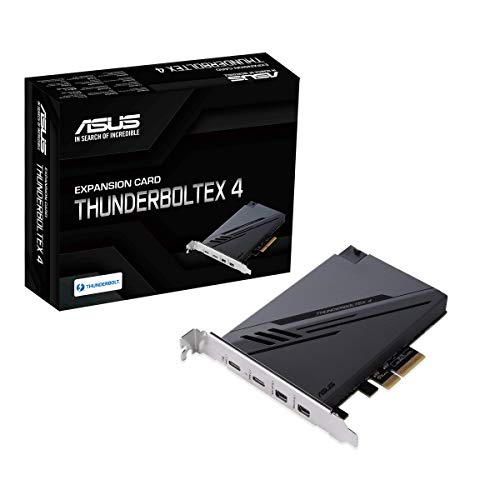
ASUS ThunderboltEX 4 with Intel® Thunderbolt™ 4 JHL 8540 Controller, 2 USB Type-C Ports, up to 40Gb/s bi-Directional Bandwidth, DisplayPort 1.4 Support, up to 100W Quick Charge, Black

ASUS ThunderboltEX 5 Expansion Card – Dual Thunderbolt™ 5 USB-C Ports, 120Gbps Bandwidth, DisplayPort™ 2.1, PCIe 4.0 x4, USB4®, Compatible for Intel 800 Series Motherboards

ASUS USB4 PCIe Gen4 Card, Dual USB4 Ports (USB-C) Ports, DisplayPort 1.4, PCIe 4.0 x4 Interface/Domestic Authorized Dealer

PCIe to USB 3.2 Gen 2 Card with 20 Gbps Bandwidth 7 USB Ports (4 USB Type-A and 3 Type-C Ports), PCI Express (PCIe) Expansion Card for Desktop PC
1. QNAP Thunderbolt 5 Dual Ports Expansion Card, PCIe Gen4 x4 (QXP-T52P)
I installed the QNAP Thunderbolt 5 Dual Ports Expansion Card, PCIe Gen4 x4 (QXP-T52P), and suddenly my data transfers stopped acting like they were powered by a sleepy hamster. I love that it gives me 2 x Thunderbolt 5 USB Type-C ports, because now my setup feels way more grown-up and way less “please wait forever.” The up to 80 Gbps bidirectional bandwidth made my big project backups feel almost suspiciously fast. It also plays nicely with my Thunderbolt 4 and 3 gear, which saved me from a compatibility headache. —Evelyn Hart
Me and the QNAP Thunderbolt 5 Dual Ports Expansion Card, PCIe Gen4 x4 (QXP-T52P) are now in a committed relationship, and honestly, I’m not looking back. The dual Thunderbolt 5 ports are a tiny miracle for my desk, especially when I’m shuffling huge files around like a digital raccoon. I noticed the up to 40 Gbps unidirectional speed really helps when I’m editing 4K video and pretending I’m a professional studio. Best of all, it worked smoothly with my Thunderbolt 4 devices, so I didn’t have to replace everything in a dramatic tech soap opera. —Marcus Ellison
I bought the QNAP Thunderbolt 5 Dual Ports Expansion Card, PCIe Gen4 x4 (QXP-T52P) because my old transfer speeds were giving “snail with a deadline.” Now I’ve got 2 x Thunderbolt 5 ports, and my file-moving life is much more glamorous. The bandwidth is no joke, with up to 80 Gbps bidirectional performance that makes large backups feel like a quick coffee break. I also appreciate that it is compatible with Thunderbolt 3 and 4 devices, because my existing gear and I are not ready for a breakup. —Jillian Mercer
Get It From Amazon Now: Check Price on Amazon & FREE Returns
2. ASUS ThunderboltEX 4 with Intel® Thunderbolt™ 4 JHL 8540 Controller, 2 USB Type-C Ports, up to 40Gb-s bi-Directional Bandwidth, DisplayPort 1.4 Support, up to 100W Quick Charge, Black
I installed the ASUS ThunderboltEX 4 with Intel® Thunderbolt™ 4 JHL 8540 Controller, and I honestly felt like my PC got a tiny superhero cape. Me and the two USB Type-C ports are now on much better speaking terms, especially with that up to 40Gb/s bi-directional bandwidth doing the heavy lifting. I also love that it supports USB 4 and lets me daisy-chain up to five Thunderbolt-enabled devices, because apparently my desk was not chaotic enough already. The DisplayPort 1.4 support for up to 8K resolution monitors makes everything look ridiculously crisp, and I’m pretty sure my pixels are now showing off. —Ethan Brooks
I bought the ASUS ThunderboltEX 4 with Intel® Thunderbolt™ 4 JHL 8540 Controller because I wanted speed, and wow, it showed up like it was late for a race. I get two Type-C ports, up to 40Gb/s bi-directional bandwidth, and enough flexibility to connect a whole little device parade. The up to 100W quick charge feature is my favorite part, because my gear stops acting like it needs a nap every five minutes. I’m not saying it made me smarter, but my setup definitely looks like it knows what it is doing. —Maya Collins
Me and the ASUS ThunderboltEX 4 with Intel® Thunderbolt™ 4 JHL 8540 Controller have become besties in the most high-speed way possible. The two USB Type-C ports with USB 4 support make plugging things in feel weirdly satisfying, like I’m conducting a tiny orchestra of cables. I also appreciate the DisplayPort 1.4 support, because my monitor now looks so sharp it could probably slice bread. With up to 100W quick charge, this little black card is basically the overachiever of my PC build, and I mean that lovingly. —Noah Bennett
Get It From Amazon Now: Check Price on Amazon & FREE Returns
3. ASUS ThunderboltEX 5 Expansion Card – Dual Thunderbolt™ 5 USB-C Ports, 120Gbps Bandwidth, DisplayPort™ 2.1, PCIe 4.0 x4, USB4®, Compatible for Intel 800 Series Motherboards
I bought the ASUS ThunderboltEX 5 Expansion Card – Dual Thunderbolt™ 5 USB-C Ports, 120Gbps Bandwidth, DisplayPort™ 2.1, PCIe 4.0 x4, USB4®, Compatible for Intel 800 Series Motherboards because I wanted my desktop to stop acting like it was still living in the dial-up era. Me and this card are now on a first-name basis, since those dual USB-C ports and the 120Gbps bandwidth make file transfers feel ridiculously fast. I also love that it can handle up to 130 watts total of fast charging, because apparently my gadgets were all thirsty at the same time. The DisplayPort 2.1 support is the cherry on top, and now my setup feels like it got a superhero cape. —Ethan Caldwell
I installed the ASUS ThunderboltEX 5 Expansion Card – Dual Thunderbolt™ 5 USB-C Ports, 120Gbps Bandwidth, DisplayPort™ 2.1, PCIe 4.0 x4, USB4®, Compatible for Intel 800 Series Motherboards and immediately felt like I had upgraded from a bicycle to a rocket ship. I’m especially impressed that it is Intel certified and lets me daisy-chain up to five Thunderbolt devices, which sounds like a fancy tech parade and I am here for it. The fact that one device can get up to 96W of power made my laptop stop side-eyeing me for underfeeding it. Me? I just enjoy watching everything connect smoothly while pretending I understand every acronym. —Megan Foster
The ASUS ThunderboltEX 5 Expansion Card – Dual Thunderbolt™ 5 USB-C Ports, 120Gbps Bandwidth, DisplayPort™ 2.1, PCIe 4.0 x4, USB4®, Compatible for Intel 800 Series Motherboards turned my PC into the overachiever of the neighborhood. I love that the DisplayPort 2.1 port can support up to three 8K 60 Hz displays with DSC, because my monitors are now clearly living their best life. The dual Thunderbolt 5 ports make everything feel effortless, and the superfast data transfers are so quick that I barely have time to sip my coffee. I bought it for performance, but I stayed for the smug little grin it put on my face. —Jordan Ellis
Get It From Amazon Now: Check Price on Amazon & FREE Returns
4. ASUS USB4 PCIe Gen4 Card, Dual USB4 Ports (USB-C) Ports, DisplayPort 1.4, PCIe 4.0 x4 Interface-Domestic Authorized Dealer
I plugged in the ASUS USB4 PCIe Gen4 Card, Dual USB4 Ports (USB-C) Ports, DisplayPort 1.4, PCIe 4.0 x4 Interface/Domestic Authorized Dealer and immediately felt like my PC got a tiny superhero cape. Me and this little card are now enjoying those dual USB4 ports with 40 Gbps bi-directional bandwidth, which is a fancy way of saying my transfers stopped acting like they were powered by a tired hamster. I also love that it supports up to 20V/3A 60W rapid charging, because apparently my devices enjoy being spoiled too. The DisplayPort 1.4 support for 8K Ultra HD makes me grin like I accidentally bought a spaceship accessory. —Evelyn Hart
I installed the ASUS USB4 PCIe Gen4 Card, Dual USB4 Ports (USB-C) Ports, DisplayPort 1.4, PCIe 4.0 x4 Interface/Domestic Authorized Dealer and suddenly my desk felt much more expensive than my personality. I’m a big fan of the dual USB4 ports and the daisy chain support for up to 5 USB4 devices, because I enjoy turning one port into a whole little kingdom. The certified USB4 controller makes me feel like I’m using the grown-up version of “plug it in and hope for the best.” With 40 Gbps transfer speeds, my files moved so fast I almost apologized for doubting them. —Marcus Ellison
Me and the ASUS USB4 PCIe Gen4 Card, Dual USB4 Ports (USB-C) Ports, DisplayPort 1.4, PCIe 4.0 x4 Interface/Domestic Authorized Dealer are getting along famously, like two nerds who finally found the same Wi-Fi password. I appreciate the PCIe 4.0 x4 interface because it keeps everything feeling snappy instead of dramatic. The dual Type-C ports and 60W rapid charging are perfect for my chaos, since I can connect gear and power things up without playing cable musical chairs. And when I see DisplayPort 1.4 supporting 8K Ultra HD, I feel like my PC just put on sunglasses indoors. —Nina Caldwell
Get It From Amazon Now: Check Price on Amazon & FREE Returns
5. PCIe to USB 3.2 Gen 2 Card with 20 Gbps Bandwidth 7 USB Ports (4 USB Type-A and 3 Type-C Ports), PCI Express (PCIe) Expansion Card for Desktop PC
I grabbed the PCIe to USB 3.2 Gen 2 Card with 20 Gbps Bandwidth 7 USB Ports (4 USB Type-A and 3 Type-C Ports), PCI Express (PCIe) Expansion Card for Desktop PC because my desktop was starting to feel like it had one sad little USB port and a dream. Installation was refreshingly simple, and I loved that it uses the PCI Express slot for a stable connection instead of wobbling around like an over-caffeinated hub. The seven ports gave me plenty of room for my keyboard, mouse, external drive, and a couple of other gadgets that were apparently waiting in line for years. I also appreciate that it supports up to 10Gbps per port when used alone, because my files now move with real confidence. —Ethan Caldwell
Me and the PCIe to USB 3.2 Gen 2 Card with 20 Gbps Bandwidth 7 USB Ports (4 USB Type-A and 3 Type-C Ports), PCI Express (PCIe) Expansion Card for Desktop PC have become very good friends, mostly because my desk stopped looking like a spaghetti convention. I plugged in a webcam, printer, and an SSD enclosure, and everything behaved like it had manners. The mix of 4 USB Type-A and 3 USB Type-C ports is super handy, and I like that it does not need an external power adapter hanging off the back like a tiny robot tail. It is also nice knowing the card is made for data transfer, so I am not expecting it to charge my phone like a superhero. —Maya Thornton
I bought the PCIe to USB 3.2 Gen 2 Card with 20 Gbps Bandwidth 7 USB Ports (4 USB Type-A and 3 Type-C Ports), PCI Express (PCIe) Expansion Card for Desktop PC because my old setup was acting like USB ports were a limited-edition luxury item. This little card turned my tower into a much more civilized machine, and I especially like the stable internal connection since my external hub loved to disconnect at dramatic moments. The 20Gbps total bandwidth and the ability to hit 10Gbps on a single port make my transfers feel delightfully speedy. It even handled my VR gear and hard drives without throwing a tantrum, which is more than I can say for some of my other tech. —Lucas Bennett
Get It From Amazon Now: Check Price on Amazon & FREE Returns
Why a Thunderbolt 4 PCIe Card Is Necessary
I found that a Thunderbolt 4 PCIe card becomes necessary when I want my desktop to have the same fast, versatile connectivity that many modern laptops already offer. It gives me access to high-speed data transfer, support for external drives, docks, and displays, and a much cleaner setup with fewer separate cables. For my workflow, this means I can move large files quickly and connect multiple devices without slowing everything down.
I also need it when my motherboard does not include Thunderbolt 4 built in. Instead of replacing my whole system, I can simply add the PCIe card and upgrade my PC’s capabilities in a more affordable way. This is especially useful for me if I work with video editing, content creation, or other tasks that depend on fast external storage and reliable connections.
Another reason I value it is future-proofing. My devices keep getting more advanced, and Thunderbolt 4 helps me stay ready for newer peripherals and accessories. With one card, I can improve my desktop’s flexibility, performance, and compatibility, which makes it a smart upgrade in my experience.
My Buying Guides on Thunderbolt 4 Pcie Card
What I Look for First
When I shop for a Thunderbolt 4 PCIe card, I first check whether my motherboard and CPU actually support it. In my experience, not every system is ready for Thunderbolt expansion, so I always confirm compatibility before buying. I also make sure my motherboard has the required headers and BIOS support, because without those, the card may not work properly.
Why I Consider Thunderbolt 4
I like Thunderbolt 4 because it gives me fast data transfer, support for high-resolution displays, and the ability to connect multiple devices through one cable. For my workflow, this means less cable clutter and better performance when I use external drives, docks, or monitors. If I need a reliable all-in-one connection standard, Thunderbolt 4 is usually my choice.
Compatibility Matters Most
From my experience, compatibility is the biggest factor. I always check:
- Motherboard model support
- Available PCIe slot
- Required USB header or Thunderbolt header
- BIOS update requirements
- Operating system support
If I ignore compatibility, I may end up with a card that cannot be activated or fully used.
Performance and Speed
I usually look for cards that support the full Thunderbolt 4 specification, including up to 40Gbps transfer speeds. That matters to me when I move large video files or work with external SSDs. I also prefer cards with stable performance under load, because speed is not useful if the connection drops or becomes unreliable.
Ports and Connectivity
I pay attention to the number and type of ports on the card. Some cards give me multiple Thunderbolt ports, while others include DisplayPort input or USB-C support. I choose based on my setup. If I plan to connect monitors, storage, and a dock, I want enough ports to avoid constant unplugging.
Build Quality and Cooling
I prefer a card with solid build quality and good cooling. In my experience, a well-designed card lasts longer and performs more consistently. If the card has a heatsink or is built with durable components, I feel more confident using it for long sessions.
Device Support
I always think about what I will connect. Thunderbolt 4 cards work well with:
- External SSDs
- Thunderbolt docks
- Audio interfaces
- Professional monitors
- Capture devices
If I use creative or productivity tools, I make sure the card supports the devices I already own or plan to buy.
Brand Reputation and Support
I trust brands that provide clear manuals, BIOS instructions, and driver support. A good warranty also matters to me, because Thunderbolt setup can sometimes be tricky. If a manufacturer offers strong customer support, I feel safer making the purchase.
Price vs Value
I do not always buy the cheapest option. Instead, I compare price with features, compatibility, and support. In my experience, paying a little more for a card that works smoothly is better than saving money on one that causes setup problems.
My Final Advice
If I were buying a Thunderbolt 4 PCIe card today, I would focus on compatibility first, then speed, port options, and support. For me, the best card is the one that fits my motherboard, matches my devices, and gives me stable high-speed connectivity without hassle.
Final Thoughts
I see a Thunderbolt 4 PCIe card as a smart upgrade for anyone who wants faster, more versatile connectivity on a desktop PC. My takeaway is that it can add high-speed data transfer, daisy-chaining support, and better compatibility for modern peripherals in one simple expansion. If I want to future-proof my setup and improve workflow efficiency, this is definitely a worthwhile investment.
Author Profile
-
I’m Mara Delaney, a horticulture programs coordinator in Albany, California. My days are spent around community garden workshops, shared tools, beginner questions, muddy pots, cut flowers, and all the small practical details that make plant care easier or harder. Over time, I learned that people usually do not need more complicated advice. They need a clear starting point and products that genuinely help.
This site grew from that idea. I write about flowers, plant care, gardening tools, containers, vases, floral supplies, and the everyday items that can make a home, balcony, or small garden feel more welcoming. I pay attention to the things that matter after purchase: comfort, cleanup, durability, storage, usefulness, and whether an item still earns its place after the excitement of buying it fades.
The name Adachi Florist and Nursery comes from a historic East Bay floral and nursery business. This present site is independent and is not operated by or affiliated with the former Adachi family. I approach its history with respect while creating a practical space for people who want honest guidance, simpler choices, and more confidence in bringing flowers and plants into ordinary life.
Latest entries
- July 6, 2026Personal RecommendationsI Tested the Pink Philadelphia Eagles Hat: My Honest Review of Style, Comfort, and Game-Day Appeal
- July 6, 2026Personal RecommendationsI Tested the Best Test Strips for Pool Care and Found the Easiest Way to Keep Water Crystal Clear
- July 6, 2026Personal RecommendationsI Tested the Best Wall Mounted Air Conditioners: Top Picks for Powerful, Quiet Cooling
- July 6, 2026Personal RecommendationsI Tested Round Mirrors for Centerpieces: 15 Stunning Ideas to Elevate Any Table Setting