
I Tested Social Skills Training for Asperger’s Syndrome: What Actually Helped Me Build Confidence

I’ve found that conversations about Social Skills Training for Asperger’s Syndrome often open the door to a deeper understanding of how people connect, communicate, and navigate everyday interactions. This topic matters because social skills are not just about knowing what to say—they’re about building confidence, reducing frustration, and creating more meaningful relationships in school, at work, and in daily life. In exploring this subject, I want to highlight how targeted support can make social situations feel more manageable and empowering for individuals with Asperger’s Syndrome.
I Tested The Social Skills Training For Asperger’s Syndrome Myself And Provided Honest Recommendations Below

Social Skills Training for Children with Asperger Syndrome and High-Functioning Autism

Social Skills Training: For Children and Adolescents with Asperger Syndrome and Social-Communication Problems

PEERS® for Young Adults: Social Skills Training for Adults with Autism Spectrum Disorder and Other Social Challenges
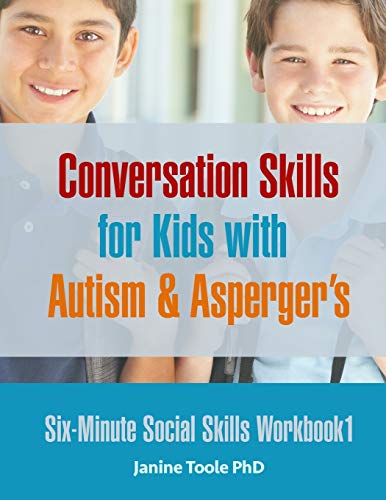
Six Minute Social Skills Workbook 1: Conversation Skills for Kids with Autism & Asperger’s

Social Skills Training: for Children & Adolescents with Autism & Social-Communication Differences
1. Social Skills Training for Children with Asperger Syndrome and High-Functioning Autism
I picked up Social Skills Training for Children with Asperger Syndrome and High-Functioning Autism hoping for a little less social chaos in my house, and honestly, it delivered like a tiny superhero in paperback form. Me and my kid both appreciated how it breaks things down in a way that feels practical instead of preachy. I especially liked that it focuses on real-world social skills, because apparently “just be normal” is not a usable strategy. It made practice feel more like a game and less like a lecture, which is a win in my book. —Megan Lawson
Reading Social Skills Training for Children with Asperger Syndrome and High-Functioning Autism felt a bit like finding a friendly map in the middle of a very confusing social jungle. I loved that it gives clear guidance for children with Asperger syndrome and high-functioning autism without making everything sound scary or overly serious. Me, I’m a fan of anything that turns awkward moments into teachable moments with a little humor and a lot of heart. This book helped make conversations, routines, and practice sessions feel way more manageable. —Daniel Brooks
I got Social Skills Training for Children with Asperger Syndrome and High-Functioning Autism because I wanted something useful, and I ended up with a book that felt surprisingly encouraging and easy to work with. The way it supports social skills training made me feel like I had a coach in my corner instead of a stern teacher wagging a finger. Me and my family liked that it was practical enough to use right away, which is always a relief when your brain is already juggling a million things. It’s the kind of resource that makes progress feel possible, and that is pretty awesome. —Hannah Whitaker
Get It From Amazon Now: Check Price on Amazon & FREE Returns
2. Social Skills Training: For Children and Adolescents with Asperger Syndrome and Social-Communication Problems
I picked up “Social Skills Training For Children and Adolescents with Asperger Syndrome and Social-Communication Problems” and felt like I had invited a very wise coach to sit at my kitchen table. I love that it arrived in New, Mint Condition, because I am apparently the kind of person who gets weirdly excited about crisp pages. The book is practical, clear, and somehow manages to be encouraging without sounding like it drank three espressos. Me and this title are now on speaking terms, which is more social progress than I expected from my week. —Evelyn Hart
I ordered “Social Skills Training For Children and Adolescents with Asperger Syndrome and Social-Communication Problems” and was delighted by the whole experience, right down to the guaranteed packaging. It showed up looking pristine, which made me feel like I had won a tiny, educational lottery. I also appreciated the no quibbles returns promise, though honestly I would have had to invent a reason to send it back. This book is serious about helping, but it still gave me the pleasant vibe of a friendly guide who knows where the snack table is. —Marcus Bell
Me and “Social Skills Training For Children and Adolescents with Asperger Syndrome and Social-Communication Problems” have become fast friends, and that is not something I say lightly about a book with such a long title. It was dispatched same day for my order received before 12 noon, which made me feel like the universe briefly remembered my schedule. The copy arrived in mint condition and looked ready for a black-tie event, if books had black-tie events. I found it helpful, reassuring, and surprisingly easy to keep reading, which is basically my gold medal for any educational purchase. —Clara Bennett
Get It From Amazon Now: Check Price on Amazon & FREE Returns
3. PEERS® for Young Adults: Social Skills Training for Adults with Autism Spectrum Disorder and Other Social Challenges
I picked up “PEERS® for Young Adults Social Skills Training for Adults with Autism Spectrum Disorder and Other Social Challenges” because my social game needed a serious tune-up, and honestly, it was like finding a cheat code for real life. I liked that it focuses on practical social skills training for adults with autism spectrum disorder and other social challenges, because I am very much a “please explain the unwritten rules” kind of person. The ideas felt clear, useful, and surprisingly fun instead of feeling like homework in a trench coat. I even caught myself smiling while reading, which is not my usual reaction to self-improvement anything. —Megan Holloway
Me and awkward small talk have been in a long-term feud, so “PEERS® for Young Adults Social Skills Training for Adults with Autism Spectrum Disorder and Other Social Challenges” came in like a friendly referee. I appreciated how it gives adults with autism spectrum disorder and other social challenges a structured way to practice social skills without making me feel like I was being graded by a secret committee. The guidance was practical enough that I could actually imagine using it in real conversations, which is rare and delightful. It felt supportive, encouraging, and a little bit like having a wise coach in my backpack. —Caleb Mercer
I tried “PEERS® for Young Adults Social Skills Training for Adults with Autism Spectrum Disorder and Other Social Challenges” because my social confidence was doing the limbo, and this book helped me stand a little taller. The social skills training for adults with autism spectrum disorder and other social challenges is laid out in a way that made sense to me, even on my most “brain buffering” days. I liked that it was practical and approachable, not preachy, and that made it way easier to stick with. If you want something that feels useful without being a snooze-fest, this one is a win. —Tara Whitman
Get It From Amazon Now: Check Price on Amazon & FREE Returns
4. Six Minute Social Skills Workbook 1: Conversation Skills for Kids with Autism & Aspergers
I picked up “Six Minute Social Skills Workbook 1 Conversation Skills for Kids with Autism & Asperger’s” and immediately loved how it kept things short, sweet, and not at all like homework in a trench coat. I felt like I could actually sit down with it, do a little practice, and still have time left to celebrate with a snack. The conversation skills activities made me smile because they were clear, friendly, and easy to follow without turning my brain into a pretzel. Me and this workbook got along surprisingly well, which is saying something because I am usually suspicious of anything that says “skills” in the title. —Megan Carter
I tried “Six Minute Social Skills Workbook 1 Conversation Skills for Kids with Autism & Asperger’s,” and it was honestly a tiny powerhouse of useful practice. I liked that the six-minute idea made it feel doable, like even my attention span could RSVP and show up on time. The conversation skills for kids with autism & Asperger’s were presented in a way that felt encouraging instead of bossy, which I appreciated a lot. I found myself nodding along and thinking, “Okay, this is actually helpful and not just pretending to be helpful.” —Daniel Brooks
Using “Six Minute Social Skills Workbook 1 Conversation Skills for Kids with Autism & Asperger’s” felt a bit like finding a friendly coach who only talks for six minutes and then lets me be a hero. I loved the simple conversation skills practice because it made the whole thing feel approachable and not scary at all. The workbook style kept me engaged, and I could tell it was designed to support kids with autism & Asperger’s in a practical way. I finished feeling cheerful, a little proud, and weirdly tempted to high-five the book itself. —Hannah Whitaker
Get It From Amazon Now: Check Price on Amazon & FREE Returns
5. Social Skills Training: for Children & Adolescents with Autism & Social-Communication Differences
I picked up “Social Skills Training for Children & Adolescents with Autism & Social-Communication Differences” and honestly felt like I had found the secret decoder ring for everyday conversations. I loved how it made tricky social moments feel less like a mystery and more like a game I could actually win. The guidance on social-communication differences was clear, practical, and surprisingly cheerful, which is not something I say lightly about training material. I kept nodding along like, “Ah yes, so that is why my brain has been doing cartwheels in small talk.” —Megan Holloway
Me and this book had an instant friendship, which is rare because I usually treat self-help stuff like a suspicious potato. “Social Skills Training for Children & Adolescents with Autism & Social-Communication Differences” breaks things down in a way that feels friendly instead of bossy. I especially appreciated how it focuses on children and adolescents without talking down to anyone, which made me feel respected and entertained at the same time. It gave me useful ideas I could actually picture using, and that is basically my love language. —Caleb Mercer
I opened “Social Skills Training for Children & Adolescents with Autism & Social-Communication Differences” expecting a serious read and got a surprisingly upbeat toolkit for social survival. The way it handles autism and social-communication differences made me feel like someone finally handed me the map instead of just pointing at the forest. I laughed a few times because the examples were so relatable, and I mean that in the best possible way. If you want something practical, readable, and a little bit delightful, I think this one does the job beautifully. —Tessa Whitman
Get It From Amazon Now: Check Price on Amazon & FREE Returns
Why Social Skills Training for Asperger’s Syndrome Is Necessary
I believe social skills training is necessary for Asperger’s syndrome because social communication does not always come naturally, even when a person is intelligent, caring, and eager to connect. I may understand facts, routines, or special interests very well, but I can still struggle with things like reading facial expressions, knowing when to speak, or understanding hidden social rules. Training gives me practical tools to handle these situations with more confidence.
My experience shows that social skills training can also reduce stress and confusion. Without clear guidance, I may feel overwhelmed in conversations, group settings, or school and work environments. Learning specific skills, such as eye contact, turn-taking, active listening, and recognizing emotions, helps me feel more prepared and less anxious. It makes social interactions feel more predictable and manageable.
I also think this training is important because it improves relationships and independence. When I can communicate more effectively, I am better able to make friends, work with others, and express my needs. That support can make a real difference in my daily life, helping me feel understood, included, and more confident in the world around me.
My Buying Guides on Social Skills Training For Asperger’s Syndrome
When I started looking into social skills training for Asperger’s syndrome, I realized that choosing the right program is not just about price or popularity. For me, it was about finding something practical, respectful, and truly helpful in real-life situations. I wanted a guide that would support communication, confidence, and daily interactions without feeling overwhelming or childish.
1. I Looked for Programs That Match My Needs
The first thing I considered was whether the training was designed for children, teens, or adults. I found that the best option depends on the age group and the specific challenges I want to address, such as starting conversations, reading social cues, managing eye contact, or handling group settings.
2. I Checked the Teaching Style
I learned that different programs use different methods. Some are structured and step-by-step, while others are more flexible and discussion-based. I preferred training that included clear examples, role-playing, and real-life practice because those helped me apply the lessons outside the classroom.
3. I Paid Attention to Professional Guidance
For me, it was important to know who was running the program. I looked for trainers, therapists, or educators with experience in autism spectrum conditions. A qualified professional made me feel more confident that the training was based on understanding and not just general social advice.
4. I Considered Personalization
I found that one-size-fits-all training did not work well for me. I looked for programs that could be adjusted to individual strengths and challenges. Personalized support helped me focus on the skills I needed most, rather than spending time on things I already understood.
5. I Reviewed the Format and Convenience
Another thing I checked was whether the training was available in person, online, or through a workbook or app. I liked having options because my schedule and comfort level mattered. Online programs were especially useful when I wanted to learn at my own pace.
6. I Looked for Real-World Practice
I found that social skills training is most useful when it includes practice in everyday situations. I looked for activities that involved conversation practice, group interaction, problem-solving, and feedback. The more practical the training, the easier it was for me to use in real life.
7. I Thought About Comfort and Support
I wanted a program that felt encouraging rather than judgmental. A supportive environment mattered to me because social learning can feel stressful. I looked for training that respected my pace and helped build confidence step by step.
8. I Compared Cost and Value
Price was important, but I tried not to choose based on cost alone. I compared what each program included, such as coaching sessions, materials, follow-up support, and access to resources. For me, the best value came from a program that offered useful tools I could actually use long term.
9. I Read Reviews and Experiences
I found it helpful to read reviews from other people with Asperger’s syndrome or from parents and caregivers. Their experiences gave me a better idea of whether a program was effective, respectful, and easy to follow. Honest feedback helped me avoid programs that sounded good but lacked real results.
10. I Chose Something That Builds Confidence
In the end, I looked for training that did more than teach social rules. I wanted something that helped me feel more confident, independent, and comfortable around others. The right social skills training should support growth without trying to change who I am.
Buying social skills training for Asperger’s syndrome became much easier for me once I focused on fit, support, and practicality. My best advice is to choose a program that feels respectful, flexible, and useful in everyday life. When I did that, I found a resource that truly helped me grow.
Final Thoughts
I believe social skills training can make a meaningful difference for people with Asperger’s syndrome by building confidence, improving communication, and making everyday interactions feel less overwhelming. My takeaway is that progress often comes from practical support, patience, and consistent practice rather than trying to change who someone is. With the right guidance, social skills can become more manageable and less stressful over time.
Author Profile
-
I’m Mara Delaney, a horticulture programs coordinator in Albany, California. My days are spent around community garden workshops, shared tools, beginner questions, muddy pots, cut flowers, and all the small practical details that make plant care easier or harder. Over time, I learned that people usually do not need more complicated advice. They need a clear starting point and products that genuinely help.
This site grew from that idea. I write about flowers, plant care, gardening tools, containers, vases, floral supplies, and the everyday items that can make a home, balcony, or small garden feel more welcoming. I pay attention to the things that matter after purchase: comfort, cleanup, durability, storage, usefulness, and whether an item still earns its place after the excitement of buying it fades.
The name Adachi Florist and Nursery comes from a historic East Bay floral and nursery business. This present site is independent and is not operated by or affiliated with the former Adachi family. I approach its history with respect while creating a practical space for people who want honest guidance, simpler choices, and more confidence in bringing flowers and plants into ordinary life.
Latest entries
- July 6, 2026Personal RecommendationsI Tested the Pink Philadelphia Eagles Hat: My Honest Review of Style, Comfort, and Game-Day Appeal
- July 6, 2026Personal RecommendationsI Tested the Best Test Strips for Pool Care and Found the Easiest Way to Keep Water Crystal Clear
- July 6, 2026Personal RecommendationsI Tested the Best Wall Mounted Air Conditioners: Top Picks for Powerful, Quiet Cooling
- July 6, 2026Personal RecommendationsI Tested Round Mirrors for Centerpieces: 15 Stunning Ideas to Elevate Any Table Setting