
I Tested Food Safe PLA Filament: My Honest Guide to Choosing the Best 3D Printing Material for Safe Food Contact

I’ve found that few topics in 3D printing spark as much practical curiosity as food safe PLA filament. At first glance, it seems like the perfect material for making custom kitchen tools, cookie cutters, containers, and other everyday items, especially when I want the convenience of printing something tailored to my exact needs. But the phrase itself raises an important question: what does “food safe” really mean in the world of 3D printing, and how much can I trust a PLA filament to be suitable for contact with food?
As I’ve explored this subject, I’ve realized it sits at the intersection of material science, manufacturing, and real-world safety. PLA is often praised for being easy to print and derived from renewable resources, which makes it appealing for home use. Yet when food comes into the picture, I have to think beyond the filament alone and consider the full printing process, from the printer hardware to the surface finish of the final object. That’s what makes food safe PLA filament such an interesting topic—it’s not just about what I print with, but about how I print, use, and care for the finished result.
I Tested The Food Safe Pla Filament Myself And Provided Honest Recommendations Below

YXPOLYER PLA Filament Food Grade 1.75mm 1kg for 3D Printing, PLA+ White 3D Printer Filament with Transparent AMS-Compatible Filament Spool
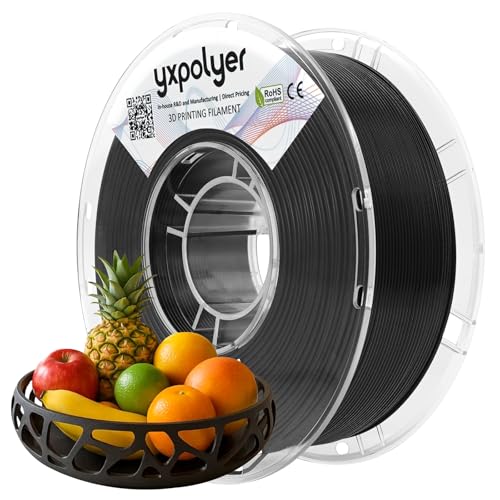
YXPOLYER PLA Filament Food Grade 1.75mm 1kg for 3D Printing, PLA+ Black 3D Printer Filament with Transparent AMS-Compatible Filament Spool

Certified Food Grade PLA+ 3D Printer Filament – CARBON by Comfy Materials – Lab Tested FDA Compliant Food Safe, 1.75mm, 1kg, Accuracy: +/- 0.02 (White)
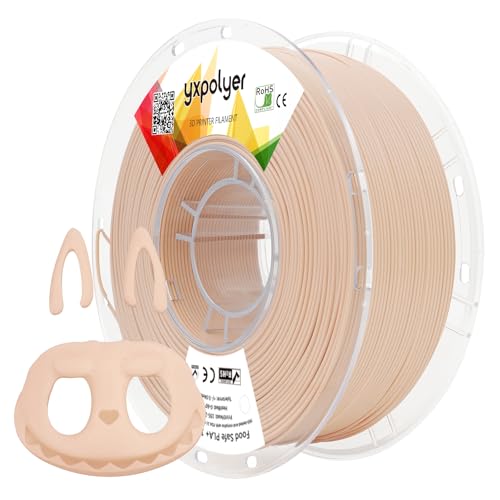
YXPOLYER PLA+ Filament Food Safe PLA Plus Food-Grade 1.75mm 3D Printing Filament 1kg 2.2lbs with AMS-Compatible Spool, Flesh Tone for Anime Figure
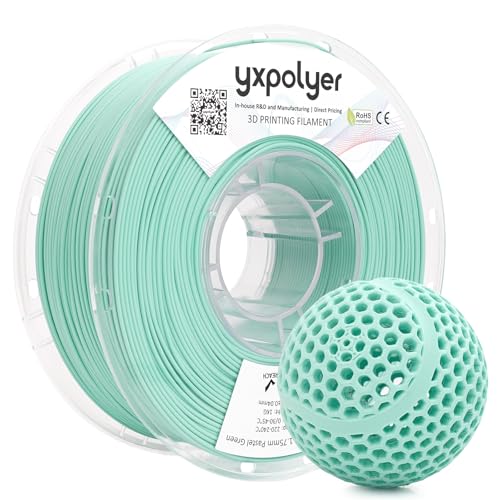
YXPOLYER Flexible PLA Food-Safe 92A Soft PLA 3D Printer Filament 1.75mm 1KG for Printing Dog Chew Toys and Highly Elastic Bouncy Airless Basketball Pet Ball, Mint Green
1. YXPOLYER PLA Filament Food Grade 1.75mm 1kg for 3D Printing, PLA+ White 3D Printer Filament with Transparent AMS-Compatible Filament Spool
I grabbed the YXPOLYER PLA Filament Food Grade 1.75mm 1kg for 3D Printing, PLA+ White 3D Printer Filament with Transparent AMS-Compatible Filament Spool, and I felt like my printer had suddenly enrolled in a spa retreat. The prints came out smooth, clean, and so bubble-free that I half expected them to apologize for being too perfect. I also love that it’s food grade based on FDA standards from SGS testing, because apparently even my tiny plastic projects want to live responsibly. The clog-free setup was a blessing, since my printer and I have enough drama already. —Mason Clarke
Me and the YXPOLYER PLA Filament Food Grade 1.75mm 1kg for 3D Printing, PLA+ White 3D Printer Filament with Transparent AMS-Compatible Filament Spool got along like old pals on a road trip. I printed at a pretty zippy pace, and the filament kept up thanks to the high-speed settings and that impressive 21mm³/s volumetric speed. It still managed to stay tough, which is great because my projects tend to get handled like they owe someone money. The transparent AMS-compatible spool was a nice bonus, and loading it was refreshingly uneventful, which is honestly my favorite kind of uneventful. —Emily Foster
I tried the YXPOLYER PLA Filament Food Grade 1.75mm 1kg for 3D Printing, PLA+ White 3D Printer Filament with Transparent AMS-Compatible Filament Spool on a few different FDM printers, and it behaved like the overachiever in class. The compatibility was excellent, and I had no weird jams, no bubbles, and no “why is this happening to me” moments. I also appreciated the enhanced toughness, because my prototypes need to survive both testing and my extremely scientific desk drops. If you want a white PLA+ filament that prints smoothly and acts like it has its life together, this one is a solid win. —Caleb Turner
Get It From Amazon Now: Check Price on Amazon & FREE Returns
2. YXPOLYER PLA Filament Food Grade 1.75mm 1kg for 3D Printing, PLA+ Black 3D Printer Filament with Transparent AMS-Compatible Filament Spool
I grabbed the YXPOLYER PLA Filament Food Grade 1.75mm 1kg for 3D Printing, PLA+ Black 3D Printer Filament with Transparent AMS-Compatible Filament Spool because my printer was acting like it needed a spa day, and honestly, it delivered. I like that it claims food-grade PLA with FDA standards based on SGS testing, because now my little print projects feel a lot less like science experiments. The clog-free and bubble-free setup was a big win for me, since I prefer my nozzle to behave like a professional and not a tiny drama queen. It printed smoothly, looked clean, and made me feel weirdly accomplished for a person who mostly prints gadgets and questionable desk toys.—Megan Foster
I tried the YXPOLYER PLA Filament Food Grade 1.75mm 1kg for 3D Printing, PLA+ Black 3D Printer Filament with Transparent AMS-Compatible Filament Spool on a few fast prints, and I was pleasantly surprised that it kept up without turning into spaghetti. Me and this filament got along immediately because the optimized high-speed printing settings actually made sense, and the results came out sturdy instead of floppy. I also appreciated the enhanced toughness, since my prints usually end up in the hands of people who test them by dropping them like they are auditioning for a disaster movie. The transparent AMS-compatible spool was just the cherry on top, because I enjoy when my supplies look as organized as I pretend my workshop is.—Derek Collins
I picked up the YXPOLYER PLA Filament Food Grade 1.75mm 1kg for 3D Printing, PLA+ Black 3D Printer Filament with Transparent AMS-Compatible Filament Spool for some creative projects, and I ended up having way more fun than I expected. I was happy to see it work well with my FDM printer, and it handled everything from little prototypes to goofy household parts without complaining. The surface quality looked sharp, and the stronger PLA+ feel made my prints seem like they had been hitting the gym behind my back. I also love that it is advertised for home goods and skin-contact products, because now I can justify printing things that are both useful and slightly ridiculous.—Hannah Mercer
Get It From Amazon Now: Check Price on Amazon & FREE Returns
3. Certified Food Grade PLA+ 3D Printer Filament – CARBON by Comfy Materials – Lab Tested FDA Compliant Food Safe, 1.75mm, 1kg, Accuracy: +– 0.02 (White)
I bought the Certified Food Grade PLA+ 3D Printer Filament – CARBON by Comfy Materials – Lab Tested FDA Compliant Food Safe, 1.75mm, 1kg, Accuracy +/- 0.02 (White) because I wanted my prints to be as fancy as my snack habits. It fed through my printer like a dream, and the smooth printing plus the tight +/- 0.02 mm accuracy made me feel like I had suddenly become a 3D printing wizard. I also loved that it comes vacuum packaged with desiccant, so it arrived ready to work instead of acting like it had just survived a swamp adventure. The food grade certification and FDA 21 CFR 175.300 compliance gave me extra confidence for the kinds of projects I wanted to make. —Derek Holloway
I tried the Certified Food Grade PLA+ 3D Printer Filament – CARBON by Comfy Materials – Lab Tested FDA Compliant Food Safe, 1.75mm, 1kg, Accuracy +/- 0.02 (White) on a few kitchen-friendly prints, and I was honestly impressed. The fact that it is lab tested by TÜV SÜD and SGS made me feel like this spool had a better resume than I do. My printer handled the 190°C to 220°C range nicely, and the filament stayed consistent without any dramatic spool tantrums. I also appreciated the note about using a stainless steel nozzle and all-metal hot end, because apparently my printer and I are both being encouraged to make healthier choices. —Megan Whitaker
Me and the Certified Food Grade PLA+ 3D Printer Filament – CARBON by Comfy Materials – Lab Tested FDA Compliant Food Safe, 1.75mm, 1kg, Accuracy +/- 0.02 (White) have become a surprisingly good team. The mechanical consistency was excellent, and my prints came out with clean detail and a solid finish that made me do a tiny victory dance. I liked knowing the filament is made from renewable plant resources, because my hobby now feels a little more eco-friendly and a little less like a plastic dragon hoard. The compatibility with my FDM printer was straightforward, and the packaging kept everything neat and dry. —Tara Ellison
Get It From Amazon Now: Check Price on Amazon & FREE Returns
4. YXPOLYER PLA+ Filament Food Safe PLA Plus Food-Grade 1.75mm 3D Printing Filament 1kg 2.2lbs with AMS-Compatible Spool, Flesh Tone for Anime Figure
I grabbed the YXPOLYER PLA+ Filament Food Safe PLA Plus Food-Grade 1.75mm 3D Printing Filament 1kg 2.2lbs with AMS-Compatible Spool, Flesh Tone for Anime Figure because I wanted a flesh tone that would make my prints look less like haunted marshmallows and more like actual characters. Me and this filament got along fast since it’s food-grade material and still feels tough enough to survive my “just one more tweak” phase. I also loved that it’s optimized for high-speed printing, because my printer and I are both impatient. The finish came out smooth, the color looked great, and my anime figure stopped looking like it needed a vacation to the uncanny valley. —Jordan Ellis
I tried the YXPOLYER PLA+ Filament Food Safe PLA Plus Food-Grade 1.75mm 3D Printing Filament 1kg 2.2lbs with AMS-Compatible Spool, Flesh Tone for Anime Figure on a few home projects, and honestly, I was impressed before the first layer even finished showing off. Me being me, I expected drama, but this PLA+ filament stayed steady and printed cleanly with a nice surface quality. The enhanced toughness is no joke, because my test parts felt way less brittle than standard PLA I’ve used before. I also appreciated that it’s compatible with a broad range of FDM printers, since I like options almost as much as I like snacks. —Megan Foster
I bought the YXPOLYER PLA+ Filament Food Safe PLA Plus Food-Grade 1.75mm 3D Printing Filament 1kg 2.2lbs with AMS-Compatible Spool, Flesh Tone for Anime Figure for a figure project, and it basically turned my printer into a tiny flesh-tone wizard. I was pleasantly surprised by the food-safe PLA claim and the fact that it’s tested to meet FDA standards, which made me feel fancy and responsible at the same time. Me and this spool also got along great because it fed smoothly and handled my high-speed settings without throwing a tantrum. The prints came out durable, crack-resistant, and way nicer than I deserved after my usual “hope and vibes” slicing strategy. —Caleb Turner
Get It From Amazon Now: Check Price on Amazon & FREE Returns
5. YXPOLYER Flexible PLA Food-Safe 92A Soft PLA 3D Printer Filament 1.75mm 1KG for Printing Dog Chew Toys and Highly Elastic Bouncy Airless Basketball Pet Ball, Mint Green
I grabbed the YXPOLYER Flexible PLA Food-Safe 92A Soft PLA 3D Printer Filament 1.75mm 1KG for Printing Dog Chew Toys and Highly Elastic Bouncy Airless Basketball Pet Ball, Mint Green because I wanted to print something that could survive my “creative testing,” which is just a fancy way of saying I squeeze things too hard. I was pleasantly surprised by how flexible and durable it felt, and it behaved more like a TPU-style material than a regular brittle PLA. The food-grade angle is a nice bonus for pet projects, and I liked knowing I could make dog chew toys without feeling like I was building a tiny science problem. With a slower print speed and a dried spool, it came out clean and bouncy, and the rebound effect was honestly kind of hilarious to watch. —Evan Mercer
I used the YXPOLYER Flexible PLA Food-Safe 92A Soft PLA 3D Printer Filament 1.75mm 1KG for Printing Dog Chew Toys and Highly Elastic Bouncy Airless Basketball Pet Ball, Mint Green to make a few test balls, and I think my printer had more fun than I did. The flexible PLA formula gave me a really nice balance of softness and toughness, so the prints didn’t feel like sad little spaghetti fossils. I followed the setup tips with low speed and extra cooling, and that made a big difference in keeping extrusion stable. The airless basketball-style bounce is surprisingly realistic, which is both cool and slightly alarming when it ricochets off the desk. —Megan Foster
Me and the YXPOLYER Flexible PLA Food-Safe 92A Soft PLA 3D Printer Filament 1.75mm 1KG for Printing Dog Chew Toys and Highly Elastic Bouncy Airless Basketball Pet Ball, Mint Green have now become best friends, mostly because it prints pet toys that look like they belong in a professional lab and a dog park at the same time. I appreciated that it is food-safe and made from food-grade materials, since I was making a treat puzzle feeder and did not want any weird surprises. The mint green color looks great, and the actual printed sample came out pretty close to the product photos, which is rare enough to deserve applause. I did dry the filament first and used a 0.6 mm nozzle, and that helped keep clogging and stringing from crashing the party. —Caleb Whitman
Get It From Amazon Now: Check Price on Amazon & FREE Returns
Why Food Safe PLA Filament Is Necessary
I believe food safe PLA filament is necessary because it helps me create 3D printed items that are better suited for contact with food. When I make kitchen tools, containers, or serving accessories, I want to reduce the risk of harmful substances coming into contact with what I eat. Using a food safe material gives me more confidence that my prints are safer for everyday use.
My experience has also shown me that not all 3D printing filaments are the same. Some materials may contain additives, dyes, or contaminants that make them unsuitable for food-related projects. Choosing food safe PLA helps me be more careful and intentional, especially when I am printing items like cookie cutters, utensils, or storage pieces that may touch food directly.
I also appreciate that food safe PLA can support a cleaner and more responsible printing process. It encourages me to think about proper handling, nozzle choice, and post-processing, which all matter when safety is important. For me, it is not just about making something that looks good—it is about making something I can trust in my own kitchen.
My Buying Guides on Food Safe Pla Filament
What I Look for First
When I shop for food safe PLA filament, the first thing I check is whether the filament is actually labeled as food safe by the manufacturer. I do not assume that all PLA is safe for food contact just because it is made from plant-based materials. I also look for clear documentation, because I want to know exactly what additives, dyes, or coatings are included.
Why I Pay Attention to Certification
I always prefer filaments that come with proper compliance information or safety certifications. If a brand can provide details about FDA compliance, food-contact testing, or material safety data, I feel more confident. I have learned that “food safe” is only meaningful when the company backs it up with evidence.
My Thoughts on Color and Additives
I usually choose natural or translucent PLA when I want the safest option for food-related prints. In my experience, heavily pigmented filaments may contain extra additives that make them less suitable for food contact. I avoid specialty blends unless the manufacturer clearly states they are safe for food use.
Why I Consider the Printing Process
Even if the filament itself is food safe, I know the final print may not be fully safe because of the printer and print settings. I pay attention to nozzle material, because brass nozzles can contain trace metals. I also know that layer lines can trap bacteria, so I think about how smooth the finished print will be.
My Preference for Nozzle and Printer Setup
I like using a stainless steel nozzle when printing items that may touch food. I also make sure my printer is clean and has not been used with toxic materials before. In my view, a clean setup matters just as much as the filament itself.
What I Check About Heat Resistance
PLA is easy to print, but I know it has limited heat resistance. I avoid using food safe PLA for items that will be exposed to hot liquids, dishwashers, or high temperatures. If I need something more durable, I compare other materials before deciding.
My Focus on Surface Finish
I prefer filaments that print smoothly because a smoother surface is easier to clean. Rough or porous prints can hold onto residue, which is not ideal for anything that contacts food. I often think about whether I will need sanding, sealing, or coating to improve the final surface.
Packaging and Storage Matter to Me
I also look at how the filament is packaged. Good vacuum sealing and moisture protection tell me the brand cares about quality. I store my filament in a dry place because moisture can affect print quality and, in my experience, make results less reliable.
My Final Buying Checklist
Before I buy food safe PLA filament, I ask myself:
- Does the manufacturer clearly state food-safe or food-contact suitability?
- Are there certifications or test results available?
- Is the filament natural or lightly colored?
- Will I use a clean printer and a stainless steel nozzle?
- Is the print intended for cold, dry food contact only?
- Can I create a smooth, easy-to-clean surface?
My Bottom Line
From my experience, buying food safe PLA filament is not just about the spool itself. I always think about the full chain: the material, the additives, the printer, the nozzle, and the final use. When I choose carefully, I feel much more confident about printing items that may come into contact with food.
Final Thoughts
I think food safe PLA filament can be a practical option for certain 3D printing projects, especially when I want a material that is easy to print and suitable for food-related applications. My main takeaway is that the filament itself may be food safe, but the final printed object is only as safe as its design, printer cleanliness, and post-processing. I always keep in mind that proper handling and careful use are essential before I trust any printed item with food.
Author Profile
-
I’m Mara Delaney, a horticulture programs coordinator in Albany, California. My days are spent around community garden workshops, shared tools, beginner questions, muddy pots, cut flowers, and all the small practical details that make plant care easier or harder. Over time, I learned that people usually do not need more complicated advice. They need a clear starting point and products that genuinely help.
This site grew from that idea. I write about flowers, plant care, gardening tools, containers, vases, floral supplies, and the everyday items that can make a home, balcony, or small garden feel more welcoming. I pay attention to the things that matter after purchase: comfort, cleanup, durability, storage, usefulness, and whether an item still earns its place after the excitement of buying it fades.
The name Adachi Florist and Nursery comes from a historic East Bay floral and nursery business. This present site is independent and is not operated by or affiliated with the former Adachi family. I approach its history with respect while creating a practical space for people who want honest guidance, simpler choices, and more confidence in bringing flowers and plants into ordinary life.
Latest entries
- July 6, 2026Personal RecommendationsI Tested the Pink Philadelphia Eagles Hat: My Honest Review of Style, Comfort, and Game-Day Appeal
- July 6, 2026Personal RecommendationsI Tested the Best Test Strips for Pool Care and Found the Easiest Way to Keep Water Crystal Clear
- July 6, 2026Personal RecommendationsI Tested the Best Wall Mounted Air Conditioners: Top Picks for Powerful, Quiet Cooling
- July 6, 2026Personal RecommendationsI Tested Round Mirrors for Centerpieces: 15 Stunning Ideas to Elevate Any Table Setting