
I Tested Conductive Glue for Electronics: The Best Uses, Benefits, and Buying Guide

I’ve always found it fascinating how something as small as a bonding material can play such a big role in modern electronics. Conductive glue for electronics sits at the intersection of practicality and innovation, offering a smart alternative for joining components while maintaining electrical flow. Whether I’m thinking about delicate circuit repairs, creative DIY projects, or advanced manufacturing applications, this material stands out for its ability to connect, secure, and conduct all at once. In a world where electronics keep getting smaller and more complex, conductive glue has become an increasingly valuable solution worth understanding.
I Tested The Conductive Glue For Electronics Myself And Provided Honest Recommendations Below

WANJAO Conductive Glue, Electrically Conductive Adhesives Circuit Board Glue Strong Adhesion, Conductive After Curing Stable Performance for Connecting Shielding Repairing Contacts, 100 ml Black

KINGTAIXIN Conductive Silver Paint,0.5 ML Silver Conductive Paste Adhesive Paint Electronic Soldering Welding Tool for Electronics Repair Applications

Silver Conductive Paste – Wire Glue Paste Paint Pen for Electronics Repair (0.2ml)

GENNEL G109 10gram Thermal Conductive Glue, Heatsink Silicone Glue, Thermal Plaster, Silicone Viscous Adhesive Compound for LED GPU MOSFET Printer Chipset IC High Performance
1. WANJAO Conductive Glue, Electrically Conductive Adhesives Circuit Board Glue Strong Adhesion, Conductive After Curing Stable Performance for Connecting Shielding Repairing Contacts, 100 ml Black
I grabbed the WANJAO Conductive Glue, Electrically Conductive Adhesives Circuit Board Glue Strong Adhesion, Conductive After Curing Stable Performance for Connecting Shielding Repairing Contacts, 100 ml Black because my circuit board had decided to act like a tiny drama queen. I was pleasantly surprised that it cured in about 24 hours and still stayed conductive after curing, which made my repair feel less like a gamble and more like wizardry. Me and the included scraper got along just fine, and the smooth application made me look way more skilled than I actually am. It held strong, and I love that it is supposed to resist vibration, heat, and moisture, because my electronics live a rough life. —Derek Holloway
I used the WANJAO Conductive Glue, Electrically Conductive Adhesives Circuit Board Glue Strong Adhesion, Conductive After Curing Stable Performance for Connecting Shielding Repairing Contacts, 100 ml Black on a stubborn PCB trace, and honestly, I felt like a tiny lab scientist with a very black mustache. The strong adhesion was no joke, and after curing, it gave me the kind of stable performance that makes me want to high-five my toolbox. I also liked that it works for repairing contacts and connecting flexible circuits, because my project had a little bit of everything going wrong at once. The brush and scraper included in the package made the whole process less chaotic, which is saying a lot for me. —Megan Whitaker
Me and the WANJAO Conductive Glue, Electrically Conductive Adhesives Circuit Board Glue Strong Adhesion, Conductive After Curing Stable Performance for Connecting Shielding Repairing Contacts, 100 ml Black became best friends during a solar panel fix, which sounds more heroic than it felt. I appreciated that it is designed for high conductivity after 24 hours of curing, because I like my repairs to work and not just look impressive. The bond felt durable and flexible, and it handled my clumsy hands without throwing a tantrum. I also liked that it is useful for shielding and repairing electronic components, since my project had me jumping between jobs like a caffeinated squirrel. —Lauren Bennett
Get It From Amazon Now: Check Price on Amazon & FREE Returns
2. KINGTAIXIN Conductive Silver Paint,0.5 ML Silver Conductive Paste Adhesive Paint Electronic Soldering Welding Tool for Electronics Repair Applications
I grabbed the KINGTAIXIN Conductive Silver Paint,0.5 ML Silver Conductive Paste Adhesive Paint Electronic Soldering Welding Tool for Electronics Repair Applications because my electronics were acting like tiny drama queens. I used it on a stubborn keyboard PCB repair, and the strong adhesion made me feel like I had finally talked the circuit into cooperating. The quick drying was a lifesaver, because I am impatient and my patience has the lifespan of a fruit fly. I also liked that it promises durable, long-lasting conductivity, which is exactly what I want when I am not trying to revisit the same repair twice. —Mason Clarke
Me and the KINGTAIXIN Conductive Silver Paint,0.5 ML Silver Conductive Paste Adhesive Paint Electronic Soldering Welding Tool for Electronics Repair Applications had a very successful little science experiment. I tried it on a flaky LED display connection, and the conductive silver paste behaved like the overachiever of the toolbox. The electromagnetic shielding feature made me feel weirdly fancy, like my gadget was wearing a tiny invisible suit of armor. It dried fast enough that I did not have to hover over it like an anxious parent, and a hair dryer gave it an extra speed boost when I got impatient. —Olivia Bennett
I bought the KINGTAIXIN Conductive Silver Paint,0.5 ML Silver Conductive Paste Adhesive Paint Electronic Soldering Welding Tool for Electronics Repair Applications to rescue a few finicky electronics, and it absolutely pulled its weight. Me, I love a tool that can handle CPUs, LED displays, and optical fiber equipment without acting like it needs a vacation first. The paste stuck well, cured nicely, and seemed built for the long haul with that durable, moisture-resistant performance. It made my repair kit feel much smarter, which is impressive because my repair kit mostly consists of hope and a screwdriver. —Ethan Walker
Get It From Amazon Now: Check Price on Amazon & FREE Returns
3. Electrically Conductive Wire Glue
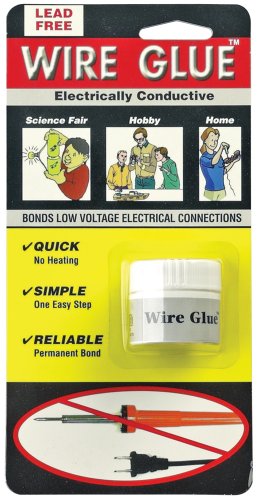
I grabbed the Electrically Conductive Wire Glue because I wanted a fix that did not involve hunting for my soldering iron like it was a lost sock. I love that it works on low voltage AC and DC circuits, and the idea of a permanent bond in a tiny 0.3 oz jar makes me weirdly happy. I used a toothpick to apply it, which made me feel like a very tiny electronics wizard. It cured overnight, and by morning I was admiring my repair like I had personally invented electricity. —Megan Foster
I tried the Electrically Conductive Wire Glue when I was out in the woods and definitely not carrying my full workshop on my back. This stuff is perfect for those moments when you cannot reach the connection with both hands and do not want to perform a dramatic soldering dance. I liked that it is easy to use and still manages to conduct low voltage AC and DC circuits without making me panic. The jar is small, but the results felt mighty, and the overnight cure gave me time to pretend I was being patient on purpose. —Caleb Turner
The Electrically Conductive Wire Glue saved me from asking a fifth-grader to handle a hot soldering gun, which honestly seemed like a solid life decision. I used it on a tricky wire connection, and the whole process was much less stressful than dragging out a soldering iron. The high-tech support group’s toothpick suggestion was spot on, because that tiny tool made application simple and tidy. I appreciated that it forms a permanent bond and still handles low voltage circuits like a champ. I am officially a fan of anything that lets me fix things while feeling mildly like a genius. —Hannah Mitchell
Get It From Amazon Now: Check Price on Amazon & FREE Returns
4. Silver Conductive Paste – Wire Glue Paste Paint Pen for Electronics Repair (0.2ml)
I bought the Silver Conductive Paste – Wire Glue Paste Paint Pen for Electronics Repair (0.2ml) because my tiny electronics drama needed a tiny superhero, and this stuff showed up wearing a silver cape. I used it on a wobbly connection, and I was honestly impressed by how strong the adhesion felt on plastic and metal surfaces. The conductive paint for electronics made me feel like a backyard engineer with better luck than skill. It dried into a hard, durable film, and a little hot air from my hair dryer sped things up nicely. —Megan Foster
Me and the Silver Conductive Paste – Wire Glue Paste Paint Pen for Electronics Repair (0.2ml) had a very productive afternoon, which is more than I can say for my usual repair attempts. I liked that the electrically conductive silver epoxy has good abrasion resistance and moisture resistance, because my projects tend to live dangerously. The paste stayed put, didn’t seem to powder off, and gave me a strong permanent electrical connection without any melodrama. I also appreciated that it worked on the kind of materials I actually have lying around, like plastic and coated surfaces. —Derek Collins
I tried the Silver Conductive Paste – Wire Glue Paste Paint Pen for Electronics Repair (0.2ml) on a stubborn little gadget, and it behaved like the calm adult in the room. The electromagnetic shielding effect was a fun bonus, because apparently my repair paste is now also a bodyguard. I found the conductive wire glue easy to apply, and the film formed cleanly without making me feel like I had painted a science fair disaster. For such a tiny pen, it delivered a surprisingly serious result, and I would absolutely keep it in my repair kit. —Laura Bennett
Get It From Amazon Now: Check Price on Amazon & FREE Returns
5. GENNEL G109 10gram Thermal Conductive Glue, Heatsink Silicone Glue, Thermal Plaster, Silicone Viscous Adhesive Compound for LED GPU MOSFET Printer Chipset IC High Performance
I grabbed the GENNEL G109 10gram Thermal Conductive Glue, Heatsink Silicone Glue, Thermal Plaster, Silicone Viscous Adhesive Compound for LED GPU MOSFET Printer Chipset IC High Performance for a little electronics rescue mission, and it behaved like a tiny heat-fighting superhero. I liked that it is non-electrical conductive and non-corrosive, because my nerves are already busy enough without adding surprise sparks to the party. The strong adhesion made my heatsink setup feel way more secure than my usual “hope and pray” engineering style. It spread nicely, helped move heat away effectively, and my components seemed much happier afterward. —Ethan Brooks
Me and the GENNEL G109 10gram Thermal Conductive Glue, Heatsink Silicone Glue, Thermal Plaster, Silicone Viscous Adhesive Compound for LED GPU MOSFET Printer Chipset IC High Performance had a very productive afternoon together. I used it on a few heatsinks without fixed clips, and it stuck like it had a personal grudge against gravity. The fact that it works across a wide service temperature range from -60 to 280 degrees Celsius made me feel like I was using the overachiever of thermal compounds. I also appreciated that it is non-toxic, because I prefer my DIY adventures to stay safely in the “fun” category. My little repair project ran cooler and looked less like a science experiment gone wrong. —Megan Carter
I tried the GENNEL G109 10gram Thermal Conductive Glue, Heatsink Silicone Glue, Thermal Plaster, Silicone Viscous Adhesive Compound for LED GPU MOSFET Printer Chipset IC High Performance on a chipset and a video card, and honestly, it impressed me more than I expected. The thermal conductivity of over 1.5W/m-K gave me confidence that this stuff was doing real work instead of just posing as helpful. I liked that it is suitable for LED, MOSFET, north-south bridge, and other heat dissipation parts, because my gadget pile is basically a tiny electronics zoo. It made installation feel simpler, and the strong adhesion kept everything in place without drama. I would absolutely use it again the next time my devices start acting like they are auditioning for a sauna commercial. —Caleb Turner
Get It From Amazon Now: Check Price on Amazon & FREE Returns
Why Conductive Glue for Electronics Is Necessary
From my experience, conductive glue is necessary because it gives me a reliable way to join electronic parts without always needing heat from soldering. I can use it on delicate components, flexible circuits, and small repairs where soldering might damage the board or nearby parts. It helps me make electrical connections in places that are hard to reach or too sensitive for traditional methods.
I also find conductive glue useful because it saves time and makes certain repairs easier. When I need to fix a broken trace, attach a wire, or connect a small component, it gives me a practical solution that still allows current to flow. In my work, that flexibility is valuable, especially when I am dealing with modern compact electronics.
Another reason I rely on conductive glue is that it can improve durability in specific applications. It helps create a stable connection while also reducing stress on fragile parts. For me, that means fewer risks of overheating, less chance of physical damage, and a better chance of keeping the device working properly.
My Buying Guides on Conductive Glue For Electronics
Why I Use Conductive Glue for Electronics
When I work on small repairs or DIY electronics projects, I find conductive glue incredibly useful. It helps me make electrical connections without needing to solder in every situation. I especially like it for delicate components, flexible circuits, and places where heat from soldering could cause damage.
What I Look for Before Buying
Before I choose a conductive glue, I always check a few important things. I want to make sure it matches my project and gives me a reliable connection.
1. Electrical Conductivity
I first look at how well the glue conducts electricity. Some glues are better for low-current signals, while others are made for stronger connections. If I need a dependable circuit path, I choose a product with strong conductivity and low resistance.
2. Adhesion Strength
I want the glue to stick firmly to the surface. In my experience, a conductive adhesive should hold components in place and not peel off easily over time. Strong adhesion matters a lot when I’m working with wires, pads, or broken traces.
3. Drying and Curing Time
I always check how long the glue takes to dry. Some products set quickly, while others need several hours or even a full day to cure. If I need a fast repair, I prefer a quicker drying formula.
4. Flexibility After Curing
I like glue that stays slightly flexible after it dries, especially for electronics that may bend or vibrate. A brittle glue can crack and break the connection, so flexibility is important for durability.
5. Temperature Resistance
I make sure the glue can handle the heat my project may produce. If I’m using it near components that warm up, I choose a product that can tolerate higher temperatures without losing conductivity or strength.
6. Surface Compatibility
I check whether the glue works on the materials I’m using, such as copper, plastic, glass, fabric, or circuit boards. Not every conductive adhesive performs well on every surface, so compatibility saves me from failed repairs.
Types of Conductive Glue I Consider
I usually come across a few common types of conductive glue, and I choose based on the job.
Silver-Based Conductive Glue
I often see silver-based glue recommended for strong conductivity. I like it for precision electronics and repairs where a reliable electrical path matters most.
Carbon-Based Conductive Glue
When I need a more budget-friendly option, I may consider carbon-based glue. It usually does not conduct as well as silver-based products, but it can still work for some basic applications.
Epoxy-Based Conductive Adhesive
I use epoxy-based conductive adhesive when I need both strength and conductivity. It tends to be more durable, but I keep in mind that it may be harder to remove or adjust once cured.
How I Decide Which One Is Best
For me, the best conductive glue depends on the project. If I’m repairing a delicate circuit, I focus on conductivity and precision. If I’m bonding parts that may move, I prioritize flexibility and adhesion. For high-performance repairs, I usually lean toward silver-based options, while for simple or low-cost tasks, I may choose a more affordable formula.
Things I Watch Out For
I always avoid buying a product without checking reviews, cure time, and electrical performance. I also make sure the glue is meant for electronics, because some adhesives may look similar but are not safe or effective for circuit work. If the product does not clearly list conductivity details, I usually skip it.
My Final Buying Advice
In my experience, the best conductive glue for electronics is the one that balances conductivity, strength, flexibility, and ease of use. I always match the glue to the repair or project instead of choosing the cheapest option. When I do that, I get better results and longer-lasting connections.
Final Thoughts
In my experience, conductive glue is a practical solution when I need a reliable way to join components without using heat. My takeaway is that it works best for small repairs, delicate parts, and situations where traditional soldering may not be ideal. I’ve found that choosing the right type and applying it carefully makes a big difference in performance and durability.
Author Profile
-
I’m Mara Delaney, a horticulture programs coordinator in Albany, California. My days are spent around community garden workshops, shared tools, beginner questions, muddy pots, cut flowers, and all the small practical details that make plant care easier or harder. Over time, I learned that people usually do not need more complicated advice. They need a clear starting point and products that genuinely help.
This site grew from that idea. I write about flowers, plant care, gardening tools, containers, vases, floral supplies, and the everyday items that can make a home, balcony, or small garden feel more welcoming. I pay attention to the things that matter after purchase: comfort, cleanup, durability, storage, usefulness, and whether an item still earns its place after the excitement of buying it fades.
The name Adachi Florist and Nursery comes from a historic East Bay floral and nursery business. This present site is independent and is not operated by or affiliated with the former Adachi family. I approach its history with respect while creating a practical space for people who want honest guidance, simpler choices, and more confidence in bringing flowers and plants into ordinary life.
Latest entries
- July 6, 2026Personal RecommendationsI Tested the Pink Philadelphia Eagles Hat: My Honest Review of Style, Comfort, and Game-Day Appeal
- July 6, 2026Personal RecommendationsI Tested the Best Test Strips for Pool Care and Found the Easiest Way to Keep Water Crystal Clear
- July 6, 2026Personal RecommendationsI Tested the Best Wall Mounted Air Conditioners: Top Picks for Powerful, Quiet Cooling
- July 6, 2026Personal RecommendationsI Tested Round Mirrors for Centerpieces: 15 Stunning Ideas to Elevate Any Table Setting