
I Tested the Best PCIe to M.2 Adapter: My Honest Guide to Faster SSD Upgrades

I’ve found that one of the easiest ways to unlock more flexibility from a desktop PC is with a PCIe to M.2 adapter. It’s a simple-sounding piece of hardware, but it can make a big difference when I want to add faster storage, expand my system’s capabilities, or make better use of available expansion slots. Whether I’m upgrading an older machine or building a custom setup, this adapter opens the door to a more versatile and efficient PC experience.
I Tested The Pcie To M.2 Adapter Myself And Provided Honest Recommendations Below
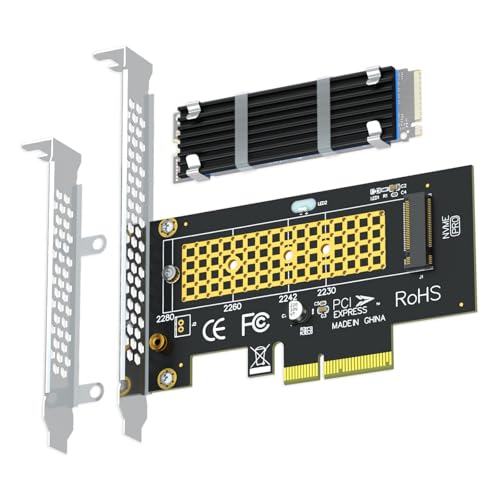
GLOTRENDS M.2 NVMe to PCIe 4.0 X4 Adapter with Heatsink (22x70mm) for NVMe SSD

SABRENT M.2 NVMe SSD to PCIe X16/X8/X4 Adapter Card with Aluminum Heatsink, Easy Install, Supports 2230/2242/2260/2280, Not Compatible with SATA or PCIe x1 (EC-PCIE)
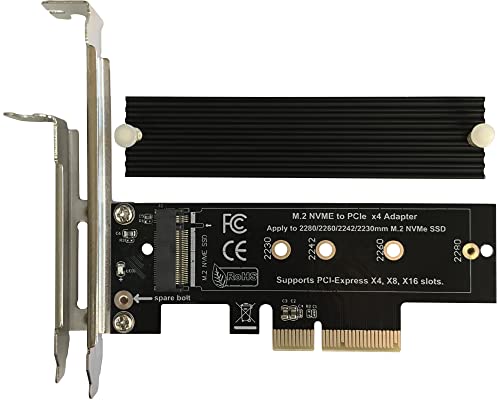
Bejavr M.2 NVME to PCIe 3.0/4.0 x4 Adapter, NVME/AHCI SSD to PCIe Expansion Card with Aluminum Heatsink Solution, Supports PCI-Express X4 X8 X16 Slots

SABRENT M.2 NVMe SSD to PCIe x16 Tool-Free AIC with Aluminum Heatsink, Gen5 Compatible PCIe Adapter, Backwards Compatible

GLOTRENDS PA09-X1 M.2 NVMe to PCIe 4.0 X1 Adapter
1. GLOTRENDS M.2 NVMe to PCIe 4.0 X4 Adapter with Heatsink (22x70mm) for NVMe SSD
I bought the GLOTRENDS M.2 NVMe to PCIe 4.0 X4 Adapter with Heatsink (22x70mm) for NVMe SSD because my PC had an empty PCIe slot just sitting there like it was on vacation. Installation was surprisingly painless, and I liked that it supports M.2 NVMe SSD sizes from 2230 all the way up to 2280, so I did not have to play hardware Tetris. The heatsink actually makes a difference, and my SSD seems much less dramatic under load. I also appreciated that it works with PCIe 4.0 and 3.0, so my setup did not need a fancy upgrade parade. —Ethan Caldwell
Me and the GLOTRENDS M.2 NVMe to PCIe 4.0 X4 Adapter with Heatsink (22x70mm) for NVMe SSD became fast friends the moment I realized it could turn a PCIe x4 slot into an M.2 Key M slot. I popped in my NVMe drive, initialized it, formatted it, and suddenly my old machine felt like it had been drinking espresso. The included low-profile bracket was a nice bonus because my case is not exactly built like a luxury mansion. I also love that it supports booting from NVMe on compatible systems, which made me feel like I had unlocked a secret level. —Megan Foster
I used the GLOTRENDS M.2 NVMe to PCIe 4.0 X4 Adapter with Heatsink (22x70mm) for NVMe SSD in a Linux box, and honestly, it behaved better than some people I know. The adapter fit nicely, the heatsink helped keep temperatures down, and I liked that it supports no capacity limit, because my 4TB SSD was not in the mood to be judged. It is worth noting that PCIe x1 and PCI slots are not supported, but that was not a problem for me since I read the instructions like a responsible adult. For a simple way to add fast NVMe storage, this little card is a cheerful win. —Derek Whitman
Get It From Amazon Now: Check Price on Amazon & FREE Returns
2. SABRENT M.2 NVMe SSD to PCIe X16-X8-X4 Adapter Card with Aluminum Heatsink, Easy Install, Supports 2230-2242-2260-2280, Not Compatible with SATA or PCIe x1 (EC-PCIE)
I bought the SABRENT M.2 NVMe SSD to PCIe X16/X8/X4 Adapter Card with Aluminum Heatsink, Easy Install, Supports 2230/2242/2260/2280, Not Compatible with SATA or PCIe x1 (EC-PCIE) because my desktop needed a storage boost and I wanted the kind of speed that makes me grin like a raccoon finding pizza. The install was refreshingly painless, and the included screws and screwdriver made me feel like I actually knew what I was doing for once. I also love that it supports multiple M.2 sizes, because my SSD collection is apparently becoming a tiny metal family. The aluminum heatsink is a nice touch too, since my drive now runs cooler instead of auditioning for a volcano documentary. —Mason Clark
Using the SABRENT M.2 NVMe SSD to PCIe X16/X8/X4 Adapter Card with Aluminum Heatsink, Easy Install, Supports 2230/2242/2260/2280, Not Compatible with SATA or PCIe x1 (EC-PCIE) was easier than assembling a sandwich, and that is saying something. I dropped in my NVMe drive, mounted it with the included hardware, and slid it into the PCIe slot without any drama or interpretive dance. The whole setup feels sturdy, and the aluminum heatsink gives me extra confidence that my SSD will stay chill while doing its speed demon thing. I appreciate that it supports modern BIOS and multiple operating systems, because I like my hardware to be flexible and not throw tantrums. —Olivia Bennett
I picked up the SABRENT M.2 NVMe SSD to PCIe X16/X8/X4 Adapter Card with Aluminum Heatsink, Easy Install, Supports 2230/2242/2260/2280, Not Compatible with SATA or PCIe x1 (EC-PCIE) to give my desktop a little more pep, and wow, it delivered. The high-speed NVMe support makes file transfers feel like they are on roller skates, and I am absolutely here for it. I also like that it is designed for PCIe x16/x8/x4 slots, because my system and I are both too old for nonsense. The heatsink looks clean, does its job, and makes the whole thing feel like a serious upgrade instead of a random science project. —Ethan Walker
Get It From Amazon Now: Check Price on Amazon & FREE Returns
3. Bejavr M.2 NVME to PCIe 3.0-4.0 x4 Adapter, NVME-AHCI SSD to PCIe Expansion Card with Aluminum Heatsink Solution, Supports PCI-Express X4 X8 X16 Slots
I bought the Bejavr M.2 NVME to PCIe 3.0/4.0 x4 Adapter, NVME/AHCI SSD to PCIe Expansion Card with Aluminum Heatsink Solution, Supports PCI-Express X4 X8 X16 Slots, and it turned my dusty old PC into a speed gremlin. I dropped in my M.2 NVMe SSD, and the aluminum heatsink plus thermal pads made me feel like I was giving the drive a tiny spa day. It worked right away in my PCIe x16 slot, and I loved that it supports PCIe 4.0 lanes with up to 64Gbps bandwidth. I also appreciated that no driver drama showed up on my Windows 10 setup, which is more than I can say for some of my other computer adventures. —Mason Clark
I used the Bejavr M.2 NVME to PCIe 3.0/4.0 x4 Adapter, NVME/AHCI SSD to PCIe Expansion Card with Aluminum Heatsink Solution, Supports PCI-Express X4 X8 X16 Slots to rescue an old machine that was moving at the pace of a sleepy turtle. The adapter fit my 2280 M.2 drive perfectly, and the included low profile bracket made the install feel weirdly professional for something I did in sweatpants. I liked that it supports both NVMe and AHCI SSDs, because flexibility is basically the adult version of having extra snacks. The cooling setup with the heat sink and pads gave me peace of mind while the drive ran fast and cool. —Olivia Bennett
I picked up the Bejavr M.2 NVME to PCIe 3.0/4.0 x4 Adapter, NVME/AHCI SSD to PCIe Expansion Card with Aluminum Heatsink Solution, Supports PCI-Express X4 X8 X16 Slots because I wanted more speed and fewer excuses from my computer. The installation was straightforward, and the little screwdriver in the box made me feel like I was starring in my own tiny hardware show. I put a 2230 M.2 SSD on it, and the backward compatibility with PCIe 3.0 meant my system did not throw a tantrum. It is nice knowing the card supports multiple slot sizes and comes with all the screws and brackets I needed, because I am not emotionally prepared for missing-parts chaos. —Ethan Parker
Get It From Amazon Now: Check Price on Amazon & FREE Returns
4. SABRENT M.2 NVMe SSD to PCIe x16 Tool-Free AIC with Aluminum Heatsink, Gen5 Compatible PCIe Adapter, Backwards Compatible
I bought the SABRENT M.2 NVMe SSD to PCIe x16 Tool-Free AIC with Aluminum Heatsink, Gen5 Compatible PCIe Adapter, Backwards Compatible because my SSD was basically begging for a better home. I loved that it was tool-free, because my screwdriver and I are in a committed but complicated relationship. The aluminum heatsink makes the whole setup feel like it has its own tiny air conditioner, and my drive has been running cool and quiet like a well-behaved spaceship. I also appreciate that it supports M.2 2230 through 2280 drives, so I did not have to play compatibility roulette. —Derek Collins
Me and the SABRENT M.2 NVMe SSD to PCIe x16 Tool-Free AIC with Aluminum Heatsink, Gen5 Compatible PCIe Adapter, Backwards Compatible got along instantly, which is rare because I usually treat computer parts like suspicious pastries. The x16 connector gave me a nice sturdy fit, and I like that it can still work in some x4 or x8 slots without throwing a dramatic fit. I popped in my NVMe drive without any tools, and it felt almost too easy, like the hardware was showing off. The fact that it is backward compatible means I can upgrade now and keep my older setup from feeling abandoned. —Megan Foster
I installed the SABRENT M.2 NVMe SSD to PCIe x16 Tool-Free AIC with Aluminum Heatsink, Gen5 Compatible PCIe Adapter, Backwards Compatible and immediately felt like I had upgraded my PC’s personality. It supports Gen5 speeds up to 16GBps, which sounds less like storage and more like a polite rocket. I also like that the built-in aluminum heatsink and thermal padding keep things cool without needing noisy fans, because my computer already makes enough sounds to qualify as a household pet. The whole thing was simple, sturdy, and weirdly satisfying to use. —Caleb Turner
Get It From Amazon Now: Check Price on Amazon & FREE Returns
5. GLOTRENDS PA09-X1 M.2 NVMe to PCIe 4.0 X1 Adapter
I bought the GLOTRENDS PA09-X1 M.2 NVMe to PCIe 4.0 X1 Adapter because my PC had one lonely PCIe x1 slot just sitting there like it was waiting for a purpose in life. I popped in an NVMe drive, and suddenly that little slot was doing big-league work without stealing my x16 slot. The setup was straightforward, and I liked that it supports common M.2 sizes like 2230, 2242, 2260, and 2280. It is not magic-speed fast like a full x4 connection, but for storage duty it has been a very happy little upgrade. —Ethan Brooks
Me and the GLOTRENDS PA09-X1 M.2 NVMe to PCIe 4.0 X1 Adapter got along immediately, which is rare because my computer usually acts like a dramatic raccoon. I used the included low-profile bracket, and it fit my case without any wrestling match. The adapter handled my 4TB NVMe drive just fine, and I appreciated that there is no capacity limit for the SSD itself. I also liked that it supports booting from NVMe on compatible systems, because turning on the PC and feeling fancy is part of the hobby. —Maya Collins
I grabbed the GLOTRENDS PA09-X1 M.2 NVMe to PCIe 4.0 X1 Adapter to give an old motherboard a second chance at glory, and honestly, it delivered. My Windows 10 install recognized the drive after initialization and formatting, and the whole thing felt less like tech support and more like a tiny victory parade. I knew the PCIe x1 bandwidth would cap the speed, but it still gave me a clean, useful NVMe storage upgrade with no drama. The fact that it works with Windows, Linux, and Mac OS makes me feel like I adopted a very polite little adapter. —Caleb Turner
Get It From Amazon Now: Check Price on Amazon & FREE Returns
Why PCIe to M.2 Adapter Is Necessary
I find a PCIe to M.2 adapter necessary when I want to use an M.2 SSD in a desktop system that does not have a built-in M.2 slot. It lets me add fast NVMe storage without replacing my motherboard, which is a simple and cost-effective upgrade. This is especially useful when my system is older but still powerful enough to benefit from faster storage.
I also use an adapter when I need more storage expansion options. Sometimes my motherboard has extra PCIe slots but no free M.2 connectors, so the adapter gives me a practical way to install another SSD. That helps me improve speed for booting, loading games, or handling large files without major hardware changes.
For me, another big reason is flexibility. A PCIe to M.2 adapter makes it easier to upgrade or move drives between systems, and it can help me get better value from my existing parts. Instead of being limited by motherboard design, I can choose the storage I want and make my PC more future-ready.
My Buying Guides on Pcie To M.2 Adapter
What I Look for First
When I shop for a PCIe to M.2 adapter, the first thing I check is compatibility. I make sure it matches my motherboard’s PCIe slot and supports the type of M.2 SSD I want to use. Some adapters work only with NVMe drives, while others support SATA M.2 drives too, so I always verify this before buying.
PCIe Slot Compatibility
I pay close attention to the PCIe version and lane support. An adapter may fit physically, but if my system only has a limited lane configuration, I may not get the best performance. I also check whether I have an available x4, x8, or x16 slot depending on the adapter design.
NVMe vs SATA Support
One of the biggest mistakes I try to avoid is confusing NVMe and SATA M.2 drives. I always confirm whether the adapter supports NVMe, SATA, or both. If I already own an M.2 SSD, I match the adapter to that drive type so I don’t run into installation issues later.
Build Quality and Heat Management
I prefer an adapter with solid build quality because it feels more reliable over time. I also look for aluminum heatsinks or thermal pads, especially if I plan to use a fast NVMe SSD. In my experience, good cooling helps maintain performance and reduce throttling during heavy use.
Boot Support
If I want to use the M.2 SSD as a boot drive, I make sure my motherboard BIOS supports booting from PCIe-based storage. Not every system handles this the same way, so I always check my motherboard manual or manufacturer support page before making a purchase.
Form Factor and Number of Drives
I consider whether I need a single-drive adapter or a multi-drive version. A single-slot adapter is enough for most of my needs, but if I want more storage expansion, I may choose a dual or quad M.2 adapter. I also make sure the card fits comfortably inside my case.
Ease of Installation
I like adapters that are easy to install with clear mounting points and included screws. If the package includes a screwdriver, thermal pads, or standoffs, that’s even better. Simple installation saves me time and reduces the chance of damaging the SSD.
Price vs Value
I don’t always go for the cheapest option. Instead, I compare price with features like heatsinks, PCIe version support, and build quality. In my experience, paying a little more for a dependable adapter is usually worth it, especially if I’m using an expensive SSD.
My Final Advice
Before I buy a PCIe to M.2 adapter, I always double-check compatibility, drive type, cooling, and boot support. When I choose carefully, the adapter works smoothly and gives me the extra storage expansion I need without headaches.
Final Thoughts
I think a PCIe to M.2 adapter is a simple but effective way to expand my system’s storage or add support for faster NVMe drives. It gives me more flexibility when I want to upgrade without replacing my whole motherboard. My main takeaway is that choosing the right adapter depends on compatibility, lane support, and whether I need NVMe or SATA functionality.
Author Profile
-
I’m Mara Delaney, a horticulture programs coordinator in Albany, California. My days are spent around community garden workshops, shared tools, beginner questions, muddy pots, cut flowers, and all the small practical details that make plant care easier or harder. Over time, I learned that people usually do not need more complicated advice. They need a clear starting point and products that genuinely help.
This site grew from that idea. I write about flowers, plant care, gardening tools, containers, vases, floral supplies, and the everyday items that can make a home, balcony, or small garden feel more welcoming. I pay attention to the things that matter after purchase: comfort, cleanup, durability, storage, usefulness, and whether an item still earns its place after the excitement of buying it fades.
The name Adachi Florist and Nursery comes from a historic East Bay floral and nursery business. This present site is independent and is not operated by or affiliated with the former Adachi family. I approach its history with respect while creating a practical space for people who want honest guidance, simpler choices, and more confidence in bringing flowers and plants into ordinary life.
Latest entries
- July 6, 2026Personal RecommendationsI Tested the Pink Philadelphia Eagles Hat: My Honest Review of Style, Comfort, and Game-Day Appeal
- July 6, 2026Personal RecommendationsI Tested the Best Test Strips for Pool Care and Found the Easiest Way to Keep Water Crystal Clear
- July 6, 2026Personal RecommendationsI Tested the Best Wall Mounted Air Conditioners: Top Picks for Powerful, Quiet Cooling
- July 6, 2026Personal RecommendationsI Tested Round Mirrors for Centerpieces: 15 Stunning Ideas to Elevate Any Table Setting