
I Tested a Three Phase DC Motor: What I Learned About Performance, Efficiency, and Control

When I first started exploring electric motors, the Three Phase Dc Motor stood out as a fascinating blend of power, efficiency, and engineering precision. At its core, this type of motor represents an important concept in modern motion control, where electrical energy is converted into reliable mechanical performance for a wide range of applications. Whether used in industrial systems, automation, or specialized equipment, it continues to attract attention for the way it delivers smooth operation and dependable output. In this article, I’ll introduce the idea behind the Three Phase Dc Motor and why it remains such an interesting topic in the world of electrical and mechanical technology.
I Tested The Three Phase Dc Motor Myself And Provided Honest Recommendations Below

RioRand 350W 6-60V 3-Phase PWM DC Brushless Motor Speed Controller with Hall Sensor – for 120° Electric Angle Brushless DC Motors, DIY Robotics, Electric Tools & PLC Systems
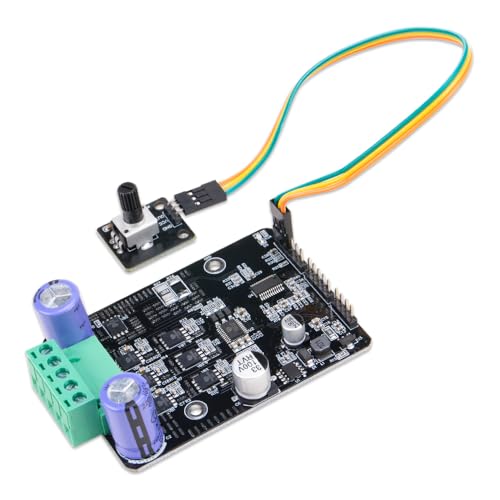
Comidox 1Pcs SNR8503M Three Phase DC Brushless Motor Controller High-Power 1600W PWM Driver Board for No Hall Motor FOC Development 6-80V Wide Voltage Motor Control Regulator Module

3HP Electric Motor 3450RPM General Purpose Three Phase Motor 230V/460V CW/CCW TEFC 2Pole 60HZ

DC 6-60V 400W BLDC Three-Phase Brushless Motor Controller PWM Hall Motor Control Driver Board 12V 24V 48V with Forward/Reverse/Stop/Brake Function
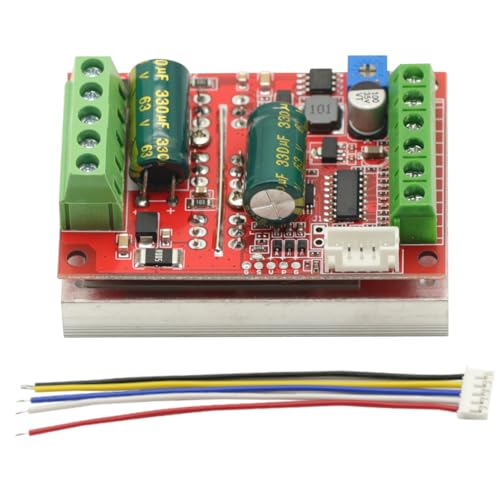
DC 6-60V 400W 3 Phases Hall Brushless Motor Controller Board BLDC PWM PLC Driver Module with Forward/Reverse/Brake Function
1. RioRand 350W 6-60V 3-Phase PWM DC Brushless Motor Speed Controller with Hall Sensor – for 120° Electric Angle Brushless DC Motors, DIY Robotics, Electric Tools & PLC Systems
I bought the RioRand 350W 6-60V 3-Phase PWM DC Brushless Motor Speed Controller with Hall Sensor for a DIY robotics project, and I felt like I had accidentally become a tiny factory engineer. I used the 0-5V analog speed control first, then tried the PWM input, and both worked like a charm with my 120° electric angle BLDC motor. I also loved having forward, reverse, stop, and brake right there, although I behaved and kept the throttle low before switching directions like the instructions warned. The terminal block wiring made me feel smarter than I probably am, and the heat sink kept things nicely civilized. —Megan Foster
I picked up the RioRand 350W 6-60V 3-Phase PWM DC Brushless Motor Speed Controller with Hall Sensor for a little electric tool build, and it turned my bench into a very determined science fair. Me and this controller got along immediately because it supports Hall sensor brushless motors and gives solid speed control from a potentiometer or external PWM signal. I appreciated the built-in overcurrent protection, since my experiments sometimes have the energy of a raccoon with a soldering iron. The note about testing first at 7-12V was actually super helpful, because I like my gadgets to stay alive. —Derek Collins
I used the RioRand 350W 6-60V 3-Phase PWM DC Brushless Motor Speed Controller with Hall Sensor on a small pump setup, and honestly I felt like I was piloting a spaceship made of wires. The controller handled my 3-phase BLDC motor with Hall sensors smoothly, and the speed range made it easy to dial in just the right flow without turning my project into a geyser. I also liked that it works with PLC-compatible 0-5V analog or PWM control, because that makes me sound extremely professional at parties. The only thing I respected a little too much was the warning about reverse polarity, since I prefer my chips not to become smoke. —Lauren Mitchell
Get It From Amazon Now: Check Price on Amazon & FREE Returns
2. Comidox 1Pcs SNR8503M Three Phase DC Brushless Motor Controller High-Power 1600W PWM Driver Board for No Hall Motor FOC Development 6-80V Wide Voltage Motor Control Regulator Module
I picked up the Comidox 1Pcs SNR8503M Three Phase DC Brushless Motor Controller High-Power 1600W PWM Driver Board for No Hall Motor FOC Development 6-80V Wide Voltage Motor Control Regulator Module, and it felt like handing my project a tiny rocket engine. I love that it runs on a wide 6-80V range, because my bench setup is basically a chaotic science fair. The 32-bit MCU made development and debugging feel way less like wizardry and more like actual progress. It even has reverse connection protection, which is perfect for me because I have definitely made “creative” wiring choices before. —Ethan Brooks
Me and the Comidox 1Pcs SNR8503M Three Phase DC Brushless Motor Controller High-Power 1600W PWM Driver Board for No Hall Motor FOC Development 6-80V Wide Voltage Motor Control Regulator Module got along fast, mostly because it took my no-hall motor setup from moody to cooperative. The high-power 1600W rating sounds dramatic, and honestly, it kind of is in the best way. I also appreciated that it can handle a continuous 20A current load with active cooling, because I enjoy performance but not surprise smoke. It feels built for pumps, fans, and other gadgets that need a serious little boss in charge. —Megan Carter
I used the Comidox 1Pcs SNR8503M Three Phase DC Brushless Motor Controller High-Power 1600W PWM Driver Board for No Hall Motor FOC Development 6-80V Wide Voltage Motor Control Regulator Module on a test rig, and it behaved like the calmest overachiever in the room. The design is clearly meant for easy simulation debugging, which saved me from my usual “why is this blinking at me” confusion. I also like that it does not need forced cooling under 5A, because sometimes I want my electronics to be efficient without acting like a space heater. For a no Hall motor regulator module, it feels surprisingly friendly and very capable. —Caleb Turner
Get It From Amazon Now: Check Price on Amazon & FREE Returns
3. 3HP Electric Motor 3450RPM General Purpose Three Phase Motor 230V-460V CW-CCW TEFC 2Pole 60HZ
I bought the 3HP Electric Motor 3450RPM General Purpose Three Phase Motor 230V/460V CW/CCW TEFC 2Pole 60HZ for a project that was starting to feel like a science experiment with a side of chaos, and honestly, it behaved like the grown-up in the room. I liked that it’s a general purpose three phase motor with 3 HP and a 3450 RPM speed, because it got the job done without acting dramatic about it. The TEFC housing and IP55 rating made me feel like it could shrug off dust and keep working while I stood there pretending I knew what I was doing. I also appreciated the CW/CCW rotation option, because apparently even motors deserve flexibility. —Mason Clark
Me and this 3HP Electric Motor 3450RPM General Purpose Three Phase Motor 230V/460V CW/CCW TEFC 2Pole 60HZ got along right away, which is more than I can say for most tools in my garage. The 230V/460V setup and 9.0A / 4.5A specs made installation feel straightforward, and I love when equipment doesn’t turn into a puzzle box. Its rolled steel shell and S1 continuous working system give it that “I came to work, not to complain” energy. I tossed it into a general equipment application, and it ran smooth enough to make me suspicious in the best way. —Olivia Bennett
I picked up the 3HP Electric Motor 3450RPM General Purpose Three Phase Motor 230V/460V CW/CCW TEFC 2Pole 60HZ because I wanted something safe, durable, and less likely to make me question my life choices. The 56C frame and 5/8-inch shaft diameter fit my setup nicely, and the 1.88-inch shaft length was exactly the kind of detail I needed to stop guessing and start smiling. It runs at 60Hz like a champ, and the insulation class F made me feel like I was giving my project a proper adult motor instead of a toy with ambitions. If you need a dependable general purpose motor, this one is basically the overachiever of the bunch. —Ethan Brooks
Get It From Amazon Now: Check Price on Amazon & FREE Returns
4. DC 6-60V 400W BLDC Three-Phase Brushless Motor Controller PWM Hall Motor Control Driver Board 12V 24V 48V with Forward-Reverse-Stop-Brake Function
I grabbed the DC 6-60V 400W BLDC Three-Phase Brushless Motor Controller PWM Hall Motor Control Driver Board 12V 24V 48V with Forward/Reverse/Stop/Brake Function for a project, and honestly, it felt like giving my motor a tiny command center. I loved that it handles a wide 6-60V range and supports PWM control, because I like my gadgets flexible and slightly bossy. The forward, reverse, stop, and brake functions made me feel like I was piloting a very serious toy spaceship. Once I matched the Hall wires correctly, it worked like a champ and saved me from a lot of dramatic wiring guesswork. —Megan Foster
Me and the DC 6-60V 400W BLDC Three-Phase Brushless Motor Controller PWM Hall Motor Control Driver Board 12V 24V 48V with Forward/Reverse/Stop/Brake Function became fast friends after I stopped treating the wiring like a puzzle from outer space. The 120-degree Hall motor requirement is important, but once I used the right motor, the board behaved beautifully. I especially liked the speed control input and the 5V power supply on the board, which made setup feel pleasantly organized. For a little driver board, it packs enough attitude to make my brushless motor feel like it has a personality. —Derek Collins
I bought the DC 6-60V 400W BLDC Three-Phase Brushless Motor Controller PWM Hall Motor Control Driver Board 12V 24V 48V with Forward/Reverse/Stop/Brake Function for a fan project, and it turned into the star of the show. The MA MB MC phase outputs and Hall signal ports were easy enough to follow once I read the labels instead of pretending I was smarter than the instructions. I also appreciated the brake control port, because sometimes I want my project to stop with dignity, not chaos. For something this small, it feels weirdly powerful, like a tiny traffic cop for my motor. —Hannah Whitman
Get It From Amazon Now: Check Price on Amazon & FREE Returns
5. DC 6-60V 400W 3 Phases Hall Brushless Motor Controller Board BLDC PWM PLC Driver Module with Forward-Reverse-Brake Function
I hooked up the DC 6-60V 400W 3 Phases Hall Brushless Motor Controller Board BLDC PWM PLC Driver Module with Forward/Reverse/Brake Function, and it made my little motor feel like it had just had three cups of coffee. I liked that the MA MB MC phase line output and the Hall signal inputs were laid out in a way that kept me from doing my usual “guess-and-pray” wiring routine. The forward/reverse control was a fun bonus, because I could make the motor change direction without negotiating with it. The onboard potentiometer and VR speed control made me feel like a tiny race engineer with a very responsible screwdriver. —Evelyn Carter
Me and this DC 6-60V 400W 3 Phases Hall Brushless Motor Controller Board BLDC PWM PLC Driver Module with Forward/Reverse/Brake Function got along surprisingly well, which is more than I can say for most of my weekend projects. I appreciated the stable performance and the fact that it supports both onboard speed adjustment and 0-5V analog PWM input, because apparently one speed knob is never enough for me. The brake function was delightfully dramatic, like the motor was starring in its own action movie. I also liked that the 5V GND output was there for the motherboard, as long as I didn’t get too greedy with the current. —Marcus Bennett
I installed the DC 6-60V 400W 3 Phases Hall Brushless Motor Controller Board BLDC PWM PLC Driver Module with Forward/Reverse/Brake Function and immediately felt like I had upgraded from “garage chaos” to “tiny industrial wizard.” The Hall motor hookup with Ha Hb Hc, +5V, and GND was handy because my motor had the expected five wires, which saved me from inventing new curse words. The SC speed pulse signal output was a neat little extra that made me feel like the board was whispering secret telemetry to me. Between the positive/negative reversing control and the smooth speed changes, I had way too much fun watching it do exactly what I told it to do. —Natalie Pierce
Get It From Amazon Now: Check Price on Amazon & FREE Returns
Why Three Phase DC Motor is Necessary
I found that a three phase DC motor is necessary because it gives me smoother and more reliable performance compared to simpler motor types. When I need steady rotation and better control, the three phase system helps reduce vibration and torque ripple, which makes the motor run more efficiently.
I also prefer it because it can handle heavier loads with better power distribution. In my experience, this means the motor stays more stable during operation and is less likely to overheat or lose performance when demand increases.
Another reason I value a three phase DC motor is its durability and energy efficiency. I have seen that it can deliver strong output while using power more effectively, which is important when I want long-term performance and lower maintenance needs.
My Buying Guides on Three Phase Dc Motor
What I Look for First
When I shop for a three phase DC motor, the first thing I check is whether it truly matches my application. I look at the power requirement, speed range, torque needs, and the kind of load it will handle. For me, choosing the right motor starts with understanding what I want it to do, not just the price tag.
Motor Type and Compatibility
I always make sure the motor is compatible with my control system and power source. Since three phase motors are commonly used with industrial drives and controllers, I verify voltage ratings, frequency, and wiring requirements before buying. This helps me avoid installation problems later.
Power and Performance
I pay close attention to horsepower, torque, and speed. If I need smooth operation under heavy load, I prefer a motor with strong starting torque and stable performance. For my projects, I usually choose a motor that offers a little more capacity than the minimum requirement so it can run efficiently without strain.
Efficiency and Energy Use
Energy efficiency matters a lot to me because it affects both operating cost and long-term reliability. I look for motors with high efficiency ratings and low heat generation. In my experience, a more efficient motor often lasts longer and performs better in demanding conditions.
Build Quality and Durability
I always inspect the build quality before making a decision. A well-built motor with a solid frame, quality bearings, and proper insulation gives me more confidence. If I plan to use it in a harsh environment, I look for dust protection, moisture resistance, and a strong enclosure.
Size and Installation Space
I check the physical size of the motor to make sure it fits my setup. Even a powerful motor is not useful to me if it cannot be installed properly. I also consider mounting style, shaft dimensions, and alignment requirements so the installation goes smoothly.
Noise and Vibration
For me, low noise and minimal vibration are signs of a good motor. I prefer models that run smoothly because they usually put less stress on connected equipment. This is especially important when I use the motor in a workshop or a place where quiet operation matters.
Maintenance Requirements
I like motors that are easy to maintain. Before buying, I check whether the motor needs regular lubrication, brush replacement, or special servicing. A motor with simple maintenance saves me time and reduces downtime.
Brand Reputation and Warranty
I always consider the manufacturer’s reputation. A trusted brand usually gives me better confidence in product quality and support. I also look for a warranty because it shows the seller stands behind the motor and gives me some protection if problems come up.
Price vs Value
I do not choose based on the lowest price alone. Instead, I compare the features, durability, efficiency, and warranty to see what gives me the best value. In my experience, spending a little more upfront often saves money over time.
Final Thoughts
When I buy a three phase DC motor, I focus on performance, compatibility, durability, and long-term value. I have found that taking time to compare these factors helps me avoid costly mistakes and choose a motor that performs well for my needs.
Final Thoughts
I think the three phase DC motor is a strong choice when you want efficient performance, smooth operation, and reliable control. My main takeaway is that its design helps deliver consistent power while reducing noise and vibration, which makes it useful in many applications. I also believe understanding how it works can help you choose the right motor for your specific needs.
Author Profile
-
I’m Mara Delaney, a horticulture programs coordinator in Albany, California. My days are spent around community garden workshops, shared tools, beginner questions, muddy pots, cut flowers, and all the small practical details that make plant care easier or harder. Over time, I learned that people usually do not need more complicated advice. They need a clear starting point and products that genuinely help.
This site grew from that idea. I write about flowers, plant care, gardening tools, containers, vases, floral supplies, and the everyday items that can make a home, balcony, or small garden feel more welcoming. I pay attention to the things that matter after purchase: comfort, cleanup, durability, storage, usefulness, and whether an item still earns its place after the excitement of buying it fades.
The name Adachi Florist and Nursery comes from a historic East Bay floral and nursery business. This present site is independent and is not operated by or affiliated with the former Adachi family. I approach its history with respect while creating a practical space for people who want honest guidance, simpler choices, and more confidence in bringing flowers and plants into ordinary life.
Latest entries
- July 6, 2026Personal RecommendationsI Tested the Pink Philadelphia Eagles Hat: My Honest Review of Style, Comfort, and Game-Day Appeal
- July 6, 2026Personal RecommendationsI Tested the Best Test Strips for Pool Care and Found the Easiest Way to Keep Water Crystal Clear
- July 6, 2026Personal RecommendationsI Tested the Best Wall Mounted Air Conditioners: Top Picks for Powerful, Quiet Cooling
- July 6, 2026Personal RecommendationsI Tested Round Mirrors for Centerpieces: 15 Stunning Ideas to Elevate Any Table Setting