
I Tested TPU Filament for 3D Printing: My Honest Guide to Flexible, Durable Prints

I’ve always found TPU filament for 3D printing fascinating because it opens the door to creating parts that are not just strong, but also flexible, durable, and surprisingly versatile. Whether I’m thinking about custom phone cases, wearable components, seals, or functional prototypes, TPU brings a unique balance of softness and resilience that makes it stand out from more rigid materials. In a world where 3D printing is often associated with hard plastics and rigid shapes, TPU adds a whole new dimension of possibilities, making it an exciting material to explore for both practical projects and creative designs.
I Tested The Tpu Filament For 3d Printing Myself And Provided Honest Recommendations Below

JAYO TPU 3D Printer Filament Bundle, 95A Flexible Soft TPU Filament 1.75mm, 250g Spool, 4 Rolls, 1kg in Total, Green+Orange+Red+Blue
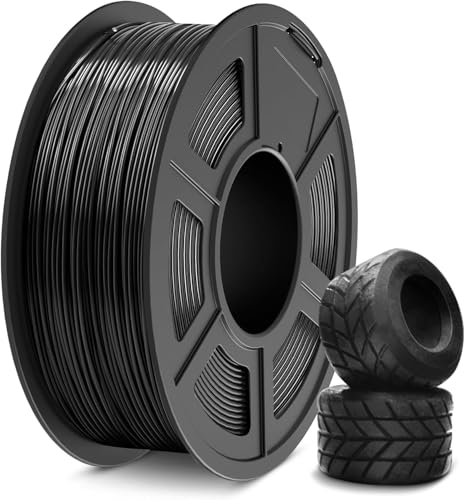
SUNLU TPU 3D Printer Filament 1.75mm, High Speed 95A TPU Filament, 1KG Flexible 3D Filament for Fast Printing, Dimensional Accuracy +/- 0.03mm, Suitable for Most FDM 3D Printers. (Black)

OVERTURE TPU Filament 1.75mm Flexible Roll, 95A Soft 3D Printer Filament, 1kg Spool (2.2 lbs), Fit Most FDM Printer (TPU Black)
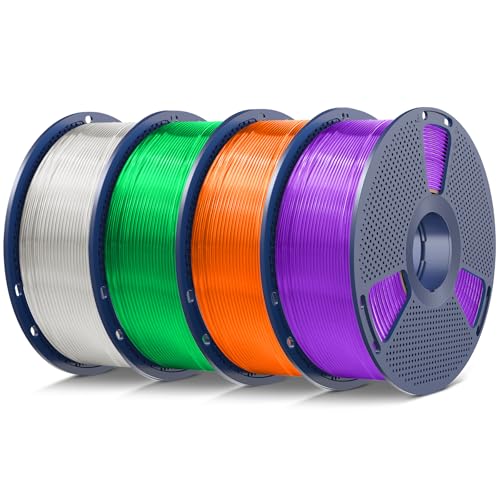
SUNLU 4kg TPU 3D Printer Filament Bundle, High Speed 95A TPU Filament 1.75mm ±0.03mm, Individually Vacuum Packed, 4kg in Total, 1kg per Spool, 4 Pack. (Transparent+Transparent Purple/Green/Orange)

LOTACTREE Black TPU Filament 1.75mm 250g (0.55lb), 95A Flexible Rubber-Like 3D Printer Filament, High Elasticity TPU Filament+/-0.03mm Accuracy
1. JAYO TPU 3D Printer Filament Bundle, 95A Flexible Soft TPU Filament 1.75mm, 250g Spool, 4 Rolls, 1kg in Total, Green+Orange+Red+Blue
I bought the JAYO TPU 3D Printer Filament Bundle, 95A Flexible Soft TPU Filament 1.75mm, 250g Spool, 4 Rolls, 1kg in Total, Green+Orange+Red+Blue because I wanted prints that could bend a little without turning into spaghetti. The Shore 95A feel is just the right mix of sturdy and squishy, like a tiny tire that went to art school. I also liked that it came dried and vacuum-sealed, because my printer is picky and I am not here to negotiate with bubbles. The prints fed smoothly, and the flexible finish made my little projects look way cooler than I deserved. —Megan Holloway
I gave the JAYO TPU 3D Printer Filament Bundle, 95A Flexible Soft TPU Filament 1.75mm, 250g Spool, 4 Rolls, 1kg in Total, Green+Orange+Red+Blue a shot for some phone grips and gadget bumpers, and it behaved like a champion. The ±0.03mm tolerance helped keep everything consistent, which made me feel like I actually knew what I was doing. I set it up with the recommended nozzle and bed temperatures, and it printed without clog drama or mysterious bubble tantrums. The soft TPU has enough flex to be useful but still feels tough, so my parts are doing their job instead of just posing for photos. —Caleb Winslow
Me and the JAYO TPU 3D Printer Filament Bundle, 95A Flexible Soft TPU Filament 1.75mm, 250g Spool, 4 Rolls, 1kg in Total, Green+Orange+Red+Blue had a very productive little adventure, and I’m honestly impressed. I tried a few everyday items, and the flexible material gave me that satisfying “bend, don’t break” result I was hoping for. It also played nicely at under 60mm/s, which is perfect because I prefer my printer to move like it has manners. Between the smooth feeding, the vacuum-sealed spools, and the bright colors, I ended up with prints that were both practical and weirdly cheerful. —Diane Mercer
Get It From Amazon Now: Check Price on Amazon & FREE Returns
2. SUNLU TPU 3D Printer Filament 1.75mm, High Speed 95A TPU Filament, 1KG Flexible 3D Filament for Fast Printing, Dimensional Accuracy +– 0.03mm, Suitable for Most FDM 3D Printers. (Black)
I grabbed the “SUNLU TPU 3D Printer Filament 1.75mm, High Speed 95A TPU Filament, 1KG Flexible 3D Filament for Fast Printing, Dimensional Accuracy +/- 0.03mm, Suitable for Most FDM 3D Printers. (Black)” because I wanted my printer to stop acting like it was made of wet spaghetti. I was honestly impressed that this TPU for fast printing kept up without turning my bench into a noodle factory. The layer adhesion came out so clean that I kept staring at the parts like they were auditioning for a tiny museum. I also liked that the 95A flexibility gave me the perfect mix of bendy and tough, which is exactly what I wanted for practical prints. —Jordan Ellis
Me and the “SUNLU TPU 3D Printer Filament 1.75mm, High Speed 95A TPU Filament, 1KG Flexible 3D Filament for Fast Printing, Dimensional Accuracy +/- 0.03mm, Suitable for Most FDM 3D Printers. (Black)” got along like two raccoons stealing snacks in the dark. The dimensional accuracy +/- 0.03mm made feeding it through my printer feel weirdly civilized, which is not a word I usually use around TPU. I followed the recommended 210-230°C nozzle range and the prints came out smooth, flexible, and ready for abuse. It was also nice to see that the filament handled wear and tear without drama, unlike my last project, which collapsed with the confidence of a folding chair. —Megan Hart
I tried the “SUNLU TPU 3D Printer Filament 1.75mm, High Speed 95A TPU Filament, 1KG Flexible 3D Filament for Fast Printing, Dimensional Accuracy +/- 0.03mm, Suitable for Most FDM 3D Printers. (Black)” on a few gadget parts, and I think my printer got a little smug about it. The fast-printing TPU really does feel like it was designed for people who want speed without sacrificing the squishy goodness. I loved the excellent printed results and the smooth finish, because my test piece looked less like a prototype and more like I knew what I was doing. The vacuum packaging was a nice bonus too, since I prefer my filament dry and my life only mildly chaotic. —Caleb Foster
Get It From Amazon Now: Check Price on Amazon & FREE Returns
3. OVERTURE TPU Filament 1.75mm Flexible Roll, 95A Soft 3D Printer Filament, 1kg Spool (2.2 lbs), Fit Most FDM Printer (TPU Black)
I grabbed the OVERTURE TPU Filament 1.75mm Flexible Roll, 95A Soft 3D Printer Filament, 1kg Spool (2.2 lbs), Fit Most FDM Printer (TPU Black) because I wanted my printer to stop acting like a rigid little drama queen. The flexibility is legit, and the 95A softness gives me that sweet spot where parts bend without turning into spaghetti. I also noticed the layer adhesion was excellent, which made my prints look way more polished than I deserved. It came sealed up nicely, and I appreciate the clog-free vibe because nobody has time for a nozzle tantrum. —Derek Holloway
Me and the OVERTURE TPU Filament 1.75mm Flexible Roll, 95A Soft 3D Printer Filament, 1kg Spool (2.2 lbs), Fit Most FDM Printer (TPU Black) got along like two raccoons stealing snacks at midnight. I was impressed by the smooth printing and the clean finish, especially since TPU can sometimes behave like it has a personal grudge. The spool arrived vacuum-sealed and dry, which made setup feel easy instead of like a science experiment. I used it for a flexible project, and the result was durable, bendy, and weirdly satisfying to squish. —Megan Whitfield
I tried the OVERTURE TPU Filament 1.75mm Flexible Roll, 95A Soft 3D Printer Filament, 1kg Spool (2.2 lbs), Fit Most FDM Printer (TPU Black) on my FDM printer, and it printed like it had its life together. The wide compatibility was great because I didn’t have to beg my machine for cooperation. I loved the excellent layer bonding, since my parts came out strong enough to survive my clumsy hands. The support and storage tips were actually useful, which is rare enough to deserve a tiny parade. —Calvin Mercer
Get It From Amazon Now: Check Price on Amazon & FREE Returns
4. SUNLU 4kg TPU 3D Printer Filament Bundle, High Speed 95A TPU Filament 1.75mm ±0.03mm, Individually Vacuum Packed, 4kg in Total, 1kg per Spool, 4 Pack. (Transparent+Transparent Purple-Green-Orange)
I grabbed the SUNLU 4kg TPU 3D Printer Filament Bundle, High Speed 95A TPU Filament 1.75mm ±0.03mm, Individually Vacuum Packed, 4kg in Total, 1kg per Spool, 4 Pack. (Transparent+Transparent Purple/Green/Orange) because I wanted my prints to be flexible, not floppy like my motivation on a Monday. I was honestly impressed that it can print up to 3 times faster than ordinary TPU, because waiting around for a gummy noodle to finish is not my idea of fun. The 95A flexibility is just right for parts that need to bend without turning into sad spaghetti, and the layer adhesion made my prints look weirdly professional. I also love that the vacuum packaging kept everything dry and ready to go, which means me and my printer had zero moisture drama. —Caleb Morgan
Me and the SUNLU 4kg TPU 3D Printer Filament Bundle, High Speed 95A TPU Filament 1.75mm ±0.03mm, Individually Vacuum Packed, 4kg in Total, 1kg per Spool, 4 Pack. (Transparent+Transparent Purple/Green/Orange) got along immediately, which is rare because my printer can be a bit of a diva. I followed the recommended settings around 210-230°C and 50-60°C on the bed, and the filament behaved like it had read the manual before I did. The print results were smooth, stretchy, and tough enough that I stopped worrying every time I bumped a part. I especially liked the color variety, because my projects now look less like test scraps and more like tiny futuristic snacks. —Nina Foster
I bought the SUNLU 4kg TPU 3D Printer Filament Bundle, High Speed 95A TPU Filament 1.75mm ±0.03mm, Individually Vacuum Packed, 4kg in Total, 1kg per Spool, 4 Pack. (Transparent+Transparent Purple/Green/Orange) for some wearable and gadget projects, and it has been a very cooperative little troublemaker. The 1.75mm diameter with ±0.03mm accuracy gave me consistent feeding, which is a big deal because I do not enjoy untangling printer chaos like it is a hobby. I was pleasantly surprised by how wear-resistant and oil-resistant the finished parts are, since my hands apparently think everything should be touched
Get It From Amazon Now: Check Price on Amazon & FREE Returns
5. LOTACTREE Black TPU Filament 1.75mm 250g (0.55lb), 95A Flexible Rubber-Like 3D Printer Filament, High Elasticity TPU Filament+–0.03mm Accuracy
I bought the “LOTACTREE Black TPU Filament 1.75mm 250g (0.55lb), 95A Flexible Rubber-Like 3D Printer Filament, High Elasticity TPU Filament+/-0.03mm Accuracy” because I wanted prints that could bend without immediately giving up on life. Me and this 95A flexible filament got along right away, and the rubber-like feel made my little test parts come out surprisingly tough and squishy in a good way. I also loved that the ±0.03mm accuracy kept the extrusion steady, so I spent less time muttering at my printer and more time admiring the results. It arrived vacuum-sealed with a desiccant, which felt very fancy for a tiny spool of black wizardry. —Mason Clark
I grabbed the “LOTACTREE Black TPU Filament 1.75mm 250g (0.55lb), 95A Flexible Rubber-Like 3D Printer Filament, High Elasticity TPU Filament+/-0.03mm Accuracy” for a couple of functional prints, and I ended up acting like a proud little engineering goblin. Me and this filament made a phone case and a gasket that both came out with great elasticity and strong layer adhesion. The print quality stayed smooth, and the clog-free behavior was a huge win because I have exactly zero patience for dramatic nozzle tantrums. For small projects, the 250g spool is perfect, which means I can experiment without committing to a mountain of material. —Evelyn Harper
I tried the “LOTACTREE Black TPU Filament 1.75mm 250g (0.55lb), 95A Flexible Rubber-Like 3D Printer Filament, High Elasticity TPU Filament+/-0.03mm Accuracy” on a few flexible prototypes, and honestly, it behaved like the overachiever in class. Me and this TPU filament had a blast printing parts that needed both stretch and strength, and the abrasion resistance gave me extra confidence. I was especially happy with how little stringing I saw, because clean prints make me feel like I know what I’m doing. The black finish looks sleek, and the whole spool felt neatly packed and ready to go straight out of the vacuum seal. —Noah Bennett
Get It From Amazon Now: Check Price on Amazon & FREE Returns
Why TPU Filament for 3D Printing Is Necessary
I find TPU filament necessary because it gives me something that rigid materials simply cannot: flexibility with strength. When I need a part that can bend, absorb impact, or return to its original shape, TPU is my go-to choice. It works especially well for items like phone cases, seals, gaskets, grips, and protective covers, where a little softness makes a big difference in performance.
My experience with TPU has shown me that it is also valuable for improving durability. Instead of cracking or snapping under pressure, TPU can handle repeated stress much better than many standard filaments. That makes it useful for functional parts that need to survive daily use, movement, or vibration. I also appreciate that it helps me create prints that feel more practical and comfortable to use.
Another reason I rely on TPU is its versatility. I can use it for both hobby projects and real-world applications, and it opens up design possibilities that I would not have with PLA or ABS alone. For me, TPU is not just an optional material—it is necessary whenever I need a 3D printed part to be flexible, resilient, and reliable.
My Buying Guides on Tpu Filament For 3d Printing
What I Look For First
When I shop for TPU filament for 3D printing, I first think about what I want the final print to do. TPU is flexible, so I use it for phone cases, gaskets, grips, wheels, and parts that need bending or shock absorption. If I need something soft and stretchy, I choose a lower hardness. If I want a tougher, firmer flexible part, I look for a higher hardness rating.
Check the Shore Hardness
One of the biggest things I pay attention to is Shore hardness, usually listed as Shore A. Lower numbers mean softer filament, while higher numbers mean stiffer material. In my experience:
- 85A to 90A feels very soft and flexible
- 95A is a common all-purpose choice
- 98A and above prints more like a firm flexible plastic
If I am new to TPU, I usually start with 95A because it gives me a good balance of flexibility and easier printing.
Make Sure It Matches My Printer
I always check whether my printer can handle flexible filament. TPU prints best on printers with:
- A direct drive extruder
- Good filament path support
- Reliable temperature control
I can print TPU with a Bowden setup, but I find it harder because the filament can buckle or jam more easily. If my printer is not made for flexible materials, I look for firmer TPU options that are easier to feed.
Look at Print Temperature Range
Before I buy, I check the recommended nozzle and bed temperatures. Most TPU filaments print around:
- Nozzle: 210°C to 240°C
- Bed: 30°C to 60°C
I prefer a filament with a clear temperature range because it helps me tune my settings faster. If the brand gives detailed recommendations, I trust it more.
Consider Diameter and Tolerance
I always make sure the filament diameter matches my printer, usually 1.75 mm or 2.85 mm. I also look for tight diameter tolerance because uneven filament can cause extrusion problems. A good tolerance means smoother feeding and more consistent prints. For me, this matters a lot with TPU since flexible filament is already more challenging to print.
Check Flexibility and Durability
Not all TPU filaments feel the same. Some are better for softness, while others are made for abrasion resistance and strength. I look for filament that mentions:
- High elasticity
- Tear resistance
- Abrasion resistance
- Good layer adhesion
If I want parts that will bend repeatedly, I choose a TPU known for durability rather than just softness.
Pay Attention to Moisture Resistance
TPU can absorb moisture from the air, and that can affect print quality. I prefer filament that comes vacuum-sealed with desiccant. If I live in a humid area, I also store it in a dry box or sealed bag after opening. In my experience, dry TPU prints much cleaner and more consistently.
Read Reviews for Ease of Printing
I always read user reviews before buying. Some TPU filaments are much easier to print than others. I look for comments about:
- Feeding smoothly
- Minimal stringing
- Good layer bonding
- Consistent spool winding
If many people say the filament is beginner-friendly, I feel more confident choosing it.
Choose the Right Brand and Value
I do not always go for the cheapest TPU. Instead, I compare price with print reliability. A slightly more expensive spool can save me time and failed prints. I usually consider:
- Brand reputation
- Customer support
- Packaging quality
- Consistency between spools
For me, value means getting dependable results, not just a low price.
Think About the Color and Finish
While performance matters most, I also care about the look of the final print. TPU comes in many colors and finishes, including matte, glossy, and translucent styles. If I am making functional parts, I may choose black or neutral colors. If I want a display piece, I pick a brighter or more polished finish.
My Final Buying Tip
If I want the best TPU filament for 3D printing, I focus on hardness, printability, diameter consistency, and moisture protection. I have found that a well-reviewed 95A TPU from a trusted brand is often the safest choice for most users. When I match the filament to my printer and keep it dry, I get much better results.
Quick Checklist Before I Buy
- Correct filament diameter for my printer
- Suitable Shore hardness for my project
- Good temperature range
- Tight diameter tolerance
- Positive reviews on print quality
–
Final Thoughts
I find TPU filament to be one of the most versatile materials for 3D printing when I need parts that are flexible, durable, and impact-resistant. My experience is that it takes a bit more care to print than standard filaments, but the results are well worth it for projects like phone cases, gaskets, and wearable parts. If I want prints that can bend without breaking, TPU is usually my go-to choice.
Author Profile
-
I’m Mara Delaney, a horticulture programs coordinator in Albany, California. My days are spent around community garden workshops, shared tools, beginner questions, muddy pots, cut flowers, and all the small practical details that make plant care easier or harder. Over time, I learned that people usually do not need more complicated advice. They need a clear starting point and products that genuinely help.
This site grew from that idea. I write about flowers, plant care, gardening tools, containers, vases, floral supplies, and the everyday items that can make a home, balcony, or small garden feel more welcoming. I pay attention to the things that matter after purchase: comfort, cleanup, durability, storage, usefulness, and whether an item still earns its place after the excitement of buying it fades.
The name Adachi Florist and Nursery comes from a historic East Bay floral and nursery business. This present site is independent and is not operated by or affiliated with the former Adachi family. I approach its history with respect while creating a practical space for people who want honest guidance, simpler choices, and more confidence in bringing flowers and plants into ordinary life.
Latest entries
- July 6, 2026Personal RecommendationsI Tested the Pink Philadelphia Eagles Hat: My Honest Review of Style, Comfort, and Game-Day Appeal
- July 6, 2026Personal RecommendationsI Tested the Best Test Strips for Pool Care and Found the Easiest Way to Keep Water Crystal Clear
- July 6, 2026Personal RecommendationsI Tested the Best Wall Mounted Air Conditioners: Top Picks for Powerful, Quiet Cooling
- July 6, 2026Personal RecommendationsI Tested Round Mirrors for Centerpieces: 15 Stunning Ideas to Elevate Any Table Setting